
AI Consulate vs. Virtual Embassy: Why Your Passport Might Still Need a Human (and No, AI Won’t Stop You at the Border)
September 24, 2025
What Is an AI Consulate? (Beginner’s Guide)
September 26, 2025
AI is popping up in the wildest places these days. You never know if you’re talking to a chatbot or just looking for snacks, only to find a smart fridge making shopping lists. In 2025, the race is real: which countries actually have AI making life smoother, not just buzzier?
Having AI is becoming more prevalent in everyday applications.
Having AI is transforming our interaction with technology.
Moreover, having AI enhances decision-making processes in various sectors.
The concept of having AI is shaping the future of industry.
Having AI will be essential in advancing technology.
Through having AI, healthcare can become more efficient.
Having AI in agriculture enhances productivity and sustainability.
Countries investing in having AI will lead the technological revolution.
The impact of having AI drives innovation across industries.
Having AI allows for a more data-informed decision-making process.
With having AI, the potential for automation expands significantly.
Having AI enables organizations to adapt quickly to market demands.
Investing in having AI strengthens competitive advantages.
Having AI can improve customer satisfaction through tailored experiences.
Furthermore, having AI provides tools that help streamline daily tasks.
AI isn’t just in gadgets. “Having AI” means a mix of smart tech, strong research, and even smarter rules. The leading places on earth are easy to spot in the data—think the United States cashing in on massive investments, China building hundreds of data centers, and the UK, India, and Germany rolling out new AI plans faster than you can say “robot assistant.” Everyday life in some cities means seeing AI at work in health clinics, city planning, or how your phone sorts spam. The importance of having AI in daily life is becoming ever more evident.
Having AI is not just a trend; it is a fundamental shift in how we interact with technology.
Moreover, having AI enables more efficient resource management across various sectors.
Having AI in healthcare can lead to better patient outcomes and optimized workflows.
Having AI also fosters innovation in agriculture, improving yield and sustainability.
Having AI is crucial for countries looking to maintain their competitive edge in technology.
The big names like the US and China always grab headlines. Stanford’s 2025 AI Index tags them as the powerhouses, with the US far ahead in tech and China right behind in patents and papers. But don’t count out India, the UK, and a few surprise contenders that are coming up fast. From robot traffic cops to virtual tutors, these countries show what “having AI” really means—more than just flashy headlines or sci-fi dreams. Countries leading the charge in having AI demonstrate diverse implementations across industries.
Having AI can transform industries by making data-driven decisions more accessible.
The potential of having AI to disrupt traditional business models is immense.
The global race for having AI capabilities is reshaping economic power dynamics.
Having AI will empower small businesses to compete on a larger scale.
Having AI can enhance customer experiences through personalized services.
The role of having AI in driving economic growth cannot be understated.
With having AI, companies can respond more quickly to market changes and consumer needs.
Thus, having AI technologies will become increasingly integral to our lives.
With having AI, the possibilities for innovation are limitless.
Ready for a closer look? The next sections break down which countries are leading, how their AI shows up in daily routines, and why some places are catching up fast. Get set for a global tour where AI shapes everything from city lights to your next app upgrade. To see how France fits into the global AI scene, check out this quick France AI Consulate General overview.
Investing in having AI is investing in the future of technology.
Having AI will help bridge the gap between technology and human needs.
Ultimately, having AI paves the way for smarter solutions in various industries.
The significance of having AI is increasingly recognized in modern society.
Adopting having AI can lead to significant improvements in productivity.
In sectors like healthcare, having AI can expedite diagnosis and treatment plans, while in agriculture, it enhances yield predictions and efficiency.
Many sectors are now exploring the benefits of having AI in their operations.
Having AI is becoming essential for companies aiming for sustainability.
Having AI allows for better analysis and understanding of market trends.
Ultimately, having AI is the future of business operations.
In conclusion, having AI is pivotal for future advancements in technology.
Top Countries Leading the AI Charge
Moreover, having AI is crucial for optimizing resources and improving decision-making across various sectors.
Indeed, as nations invest in having AI capabilities, their potential for innovation increases significantly.
Ultimately, having AI is shaping the future of industries and the global economy.
The race for who has top AI power isn’t just about flash—it’s about who spends the most, builds the smartest, or puts robots in surprising places. From Silicon Valley gossip to Indian farmers with data apps, these leaders all have their own style. Below, each major player gets a spotlight, quirks and all.
One of the benefits of having AI is the ability to analyze large datasets quickly, leading to better insights.

United States: The AI Powerhouse

The United States is AI’s favorite playground. Think Silicon Valley, but with even more hoodies and billionaires talking about their super-smart robots. The country dropped an astounding $471 billion into AI by 2025, far outpacing any other rival. Companies like Google toss out new models faster than you can say “chatbot fatigue,” and unicorn startups keep bouncing out of every shared workspace in Palo Alto.
Here’s what helps the US stay on top:
- CHIPS Act: This law poured in well over $50 billion for chip making and research, fueling arms races for smarter, cheaper hardware. Read more on the impact of the CHIPS and Science Act on AI.
- Big Players: Google, Microsoft, and OpenAI roll out massive generative AI every year.
- Star Workforce: The US trains top researchers who publish the most-wanted papers and win the buzziest AI comps.
- Startup Mania: No one matches the wild number of new AI ventures stateside.
As we continue to see developments in technology, having AI will play a pivotal role in driving change.
In conclusion, having AI is not just beneficial, but necessary for future advancements.
In the realm of global competition, having AI becomes a key differentiator among leading nations.
For instance, having AI is evident in smart city initiatives that enhance urban living.
With lawmakers throwing stacks of cash and the Valley’s culture of “move fast, break lunch,” it’s no wonder the US keeps its spot at the top of every AI ranking. For more on the record-breaking global fund flows, check Funding the Future: Global Investment Strategies in AI.
China: Closing the Gap Fast

China moves with rocket speed. Patent numbers? Off the charts. Over 70% of global AI patents come from this whirlwind “factory of smart.” The government sets giant AI budgets and funds chip upgrades so local apps can handle anything—shopping for fruit, paying bills, or translating in real time.
Fast facts:
- 15 new top-tier AI models in 2024.
- State tech players roll out plans for more chips, more funding, and, well, more everything.
- Cities turn to AI for ride-hailing, payments, and those video apps that outglow TikTok.
- China led AI patent race in 2024 and doesn’t seem to blink.
This trend is reflective of a broader movement toward having AI integrated into everyday life.
Thus, having AI continues to present new opportunities for innovation and growth.
Moreover, having AI supports sustainability efforts by optimizing resource usage.
People see the impact everywhere—apps that “do it all” pop up in days, not months. China’s digital jump from bike-sharing to robots in the subway has been wild to watch.
India: The Rising Star

India’s AI is like spicy street food— fast, sharp, and everywhere. With $1.25 billion poured in, the country’s big brains put AI to work in farms and cell towers, not just cubicles. Need a drone to check your crops? There’s an app for that. The rise in data centers (think endless blinking lights stretching to the horizon) keeps growing, supporting every smart project, from banking to village clinics.
What stands out in India:
- 59% business adoption for AI—every shop or call center wants a piece.
- Engineers code by day, but even rural farmers use smart tech for the weather.
- India’s AI data center market is booming as more data and apps go local.
In the coming years, having AI will likely expand beyond current applications.
With the right policies, having AI can lead to ethical considerations in technology deployment.
If the US had Google and Silicon Valley, India has a coder in every neighborhood and an AI-powered hack for every old problem.
Canada and Singapore: Smart and Steady

Canada and Singapore may not go for big headlines, but their style is calm and precise. Canada runs some of the best research hubs, turning out brainy papers and homegrown startups. The government’s $2 billion budget boost means labs stay busy—cold winters, hot AI.
Meanwhile, Singapore is proof that a small island can punch way above its weight. Finance firms and smart city projects use more AI per person than almost anywhere, and efficiency is practically a national sport.
Canada-Singapore quick facts:
- Canada: $2 billion for research, top-tier academic labs
- Singapore: Top spot in per-person AI use, especially in banking and smart government projects
Want a look at Canadian AI investments just announced for 2024? See Canada’s AI funding highlights.
It’s evident that having AI is shaping the future landscape of work.
Each country on this list does AI in its own way—from wild VC sprints to smart, steady planning. What matters most: the ideas keep coming, and there’s always a new way to make tech work for people, not just headlines.
What Makes These Countries AI Winners

Some nations don’t just use AI—they shape where and how the smartest systems live, play, and work. Picking AI winners means looking past the hype to the real work behind smarter apps, learning bots, and all those helpful nudges in daily life. The countries at the top mix funding, brainpower, and smart rules. Here’s what separates the leaders from the crowd.
Big Bucks and Smart Investments

Cold, hard cash still matters. Big money means more labs, faster chips, and enough data centers to light up a city. The United States tops the funding chart, with a jaw-dropping $471 billion poured into AI by 2025. China holds steady at $119 billion, while the UK pushes close behind with a hefty $28 billion. A tidy table keeps the numbers easy:
| Country | 2025 AI Investment (USD) |
|---|---|
| United States | $471 billion |
| China | $119 billion |
| UK | $28 billion |
Big spending means better infrastructure—think giant server farms and endless racks of chips. It also means more startups fighting to invent the next big chatbot, city scanner, or health app. In Silicon Valley, money heats up the race; in China, investment launches new AI tools daily. This cash keeps ideas moving from the whiteboard to your hands, sometimes overnight. More on global AI investment buzz? Scan the latest details in the 2025 AI Index Report.
Talent Pools and Education Push

Brains matter as much as budgets. The US, India, and South Korea fill labs with talent—engineers, data wranglers, and quick-thinking students. In 2025, the US and India together host more than half the world’s AI workforce. The UK jumps into third place for highest talent density among its population.
- The US churns out AI experts from places like MIT, Stanford, and a wave of online bootcamps.
- India’s millions of skilled coders master AI tools faster than you can order samosas.
- South Korea, famous for top schools, sharp engineers, and tech-friendly teachers, grows its AI crowd each year.
Universities matter but training on the job is just as strong. New skills flow through workshops and quick online courses, fueling every startup and big tech company. Want proof that talent rules? Check the fresh stats on global AI talent in the AI Statistics 2024–2025 roundup. For an easy look at using AI at work—no PhD needed—see some helpful AI productivity and creativity tips.
Government Plans and Rules

Policy can make or break AI growth. Now, over 75 countries run official AI strategies. Some cheer on startups and open data; others focus on rules and keeping things fair. The US chases speedy growth with loose red tape and big prizes for breakthroughs. In contrast, the European Union stands firm on rules, drawing clear lines about ethics through leaders like Germany and the UK.
There’s a twist. AI rules aren’t slow anymore. Since 2016, government regulations have jumped ninefold. No more wild west—watchdogs now keep tabs on safety, privacy, and even robot manners.
A quick scan on who does what:
- US: Pushes innovation with few limits.
- EU (Germany, UK): Lays down strict rules for fair and ethical AI.
- Asia: Mixes rapid adoption with homegrown guidelines.
Want the inside scoop on global AI laws? The Global AI Regulations Tracker is packed with updates from every region. Track which country is rolling out which plan, and why they matter.
Smart policies steer the race; they decide if AI tech sticks around, helps people, or just gets lost in paperwork. If you want to see top tips for putting AI to work safely, check the guide on essential AI tips for everyday success.
Each winner stands apart, but together, these countries show that money, brains, and rules are the secret sauce that keep AI moving forward.
AI Around the World and What’s Next
AI is now the big idea traveling across borders. From tough rules in Europe to robot brainstorms in Japan, countries each chart their own path. Some race ahead with dollar signs in their eyes, others ask tough questions about fairness, privacy, and robot manners. The next wave of AI growth is blending speed, ethics, and surprise twists. Let’s see how top regions handle the pressure.
Europe’s Balanced Approach: UK, Germany lead with ethics and industry AI. Note EU AI Act influences.
As we move forward, having AI becomes crucial for maintaining competitive advantage.
In a globalized economy, having AI is essential for innovation and collaboration.
Ultimately, having AI can lead to breakthroughs that transform industries.
Moreover, having AI is paving the way for smarter technologies that enhance daily life.

Europe is like the referee in the world’s AI match. While everyone else runs faster, the UK and Germany insist on playing fair. Instead of pouring all the money into wild experiments, these leaders talk about trust, safety, and rules for robots. The big story here? The EU AI Act, which landed with the kind of buzz usually reserved for royal weddings.
As industries evolve, having AI will play a vital role in driving efficiency and innovation.
- Germany treats AI like high-end engineering—a tool for making factories smarter, hospitals sharper, and cities smoother. They juggle big budgets and complex rules better than most.
- The UK brings together smart researchers with a hint of British wit. They put as much effort into ethics papers as they do into chatbots and medical tools.
- The EU AI Act now shapes what companies can and can’t do. It lays out checks for bias, privacy, and “black box” decisions, pushing for models that humans can trust. Rules like these may slow things down but set the stage for fairer tech.
For a closer look at Germany’s place in global AI, you might enjoy Germany’s AI innovations and global comparisons. Get the numbers on Europe’s approach in this AI Statistics 2024–2025: Global Trends, Market Growth & ….
Asia’s Other Heavy Hitters: Japan robotics, South Korea semis. Steady growth in adoption.
In summary, having AI is integral to the future of global development.
As we look ahead, having AI will continue to be a driving force for change.
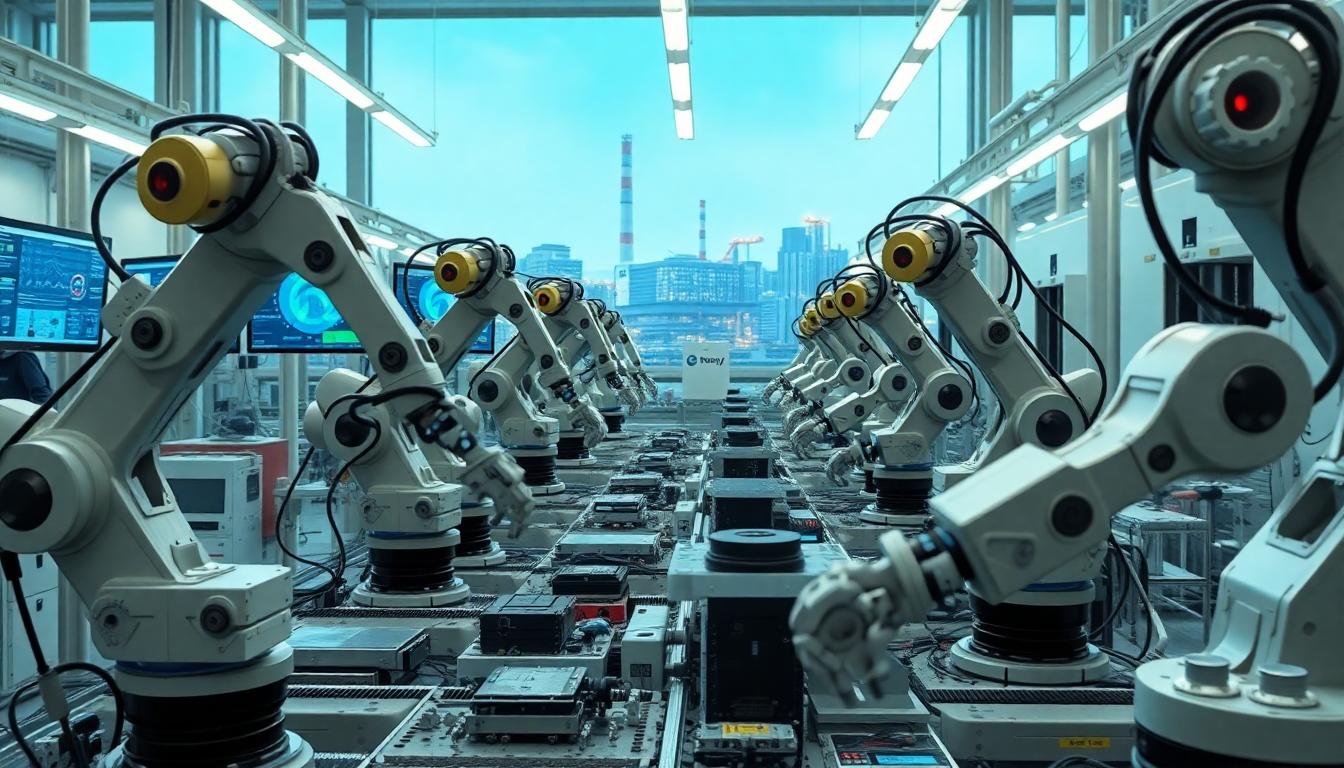
Asia is more than just China in the AI race. Japan and South Korea stake their claim with gears, chips, and smooth efficiency. Japan loves its robots—old news, right? But these days, their factories run smarter than ever, with AI and humans working side by side. Picture assembly lines where a robot arm sorts tiny parts with the focus of a sushi chef.
Then there’s South Korea and its chip makers. High-speed internet, sharp engineers, and a culture hungry for the next big gadget make this country a quiet powerhouse. Samsung and SK Hynix keep shrinking chip sizes, while classrooms get new AI tutors each year.
- Japan: Keeps the focus on practical robots, automation in industry, and handy home inventions.
- South Korea: Pushes hard on semiconductors, making sure their chips keep AI brains running fast.
Both countries don’t shout about AI, but in 2025, their adoption rate climbs higher each year. Learn why some tools are must-haves in Top 10 AI tools professionals should know in 2025.
The Road Ahead for Global AI: Predict more investments, collaborations. Fun note on AI surprises coming.

What’s next? Expect bigger bets and stranger partnerships. Companies and countries no longer work solo. In 2025, more than 70% of organizations worldwide use AI in at least one business function, a jump from earlier years. Global investment in AI holds strong, money flying in from Silicon Valley to Munich and Seoul.
- Collaboration is on trend. AI research includes teams from every continent, and data gets shared more quickly than coffee in a break room.
- Investment isn’t slowing down. More countries compete to build newer, smaller chips and hire more brainy people.
AI always delivers a twist. Maybe it’s a new robot chef from Tokyo or a chatbot that finally understands your sarcasm. If there’s one thing to count on, it’s surprises—good, weird, and everywhere.
For deeper stats and what countries are planning, tap the latest Artificial Intelligence Index Report 2025. Anyone curious about how newsrooms worldwide use AI should check Exploring AI’s impact on global news reporting in 2025.
AI’s future is a wild mix—cash, ideas, new laws, and a dash of robot drama. Don’t blink or you’ll miss the next surprise.
Conclusion
AI isn’t tied to one country or language. Every leader on this list picked a favorite move—big dollars, more brainpower, or rules that make robots mind their manners. The US keeps making headlines, while China, India, the UK, and Germany throw their own sparks. South Korea and Japan bring the best robots, and Canada plays its cards in smart research and open ideas.
It’s all a group effort. A new upgrade in Tokyo might show up in London before lunch. One region’s AI rulebook often shows up in someone else’s news. Today’s smarter tech crosses borders as fast as a meme. For those who want a closer peek at the policy behind it all, the deep dive into AI safety regulations worldwide overview is worth a scroll.
Thus, having AI is not merely a trend but a necessary evolution in our technology landscape.
No country can run this show alone. Next time a phone guesses your mood or your fridge suggests milk, that’s teamwork in code—global, quirky, and always changing. Watch these spots, but don’t forget, even small countries help steer what’s next. The tech may be smart, but the best part is the shared ride. Thanks for tagging along—now, what’s AI running in your city?
In conclusion, the implications of having AI are profound and far-reaching.
Ultimately, having AI will shape how we approach challenges in various sectors.
Therefore, having AI holds the key to unlocking future possibilities.
Thus, having AI will change how industries operate and innovate.
