
Can AI Detect Bias in Data? A Deep Dive
November 8, 2025
AI and Global Politics: The Emerging Digital Cold War
November 8, 2025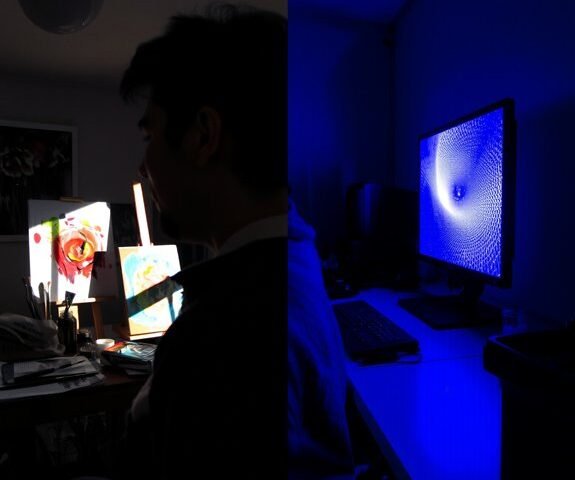
You’re watching tools produce polished work faster than people used to. You see them generate ideas, remix styles, and automate tedious tasks. But you also feel the gaps—lived experience, judgment, and purpose—that machines don’t fill. If you want to know what will actually change about creative work, keep going.
Key Takeaways
- AI will augment and accelerate creative work by generating high-quality drafts, variations, and prototypes, not fully replace human creators.
- Machines struggle with deep originality, long-term intent, embodied experience, and nuanced emotional judgment that underpin transformative creativity.
- Best outcomes come from human–AI collaboration: humans set goals, curate outputs, and infuse meaning while AI provides scaffolding and options.
- Widespread use of AI raises ethical, cultural, and intellectual-property challenges that require regulation, attribution, and community consent.
- To thrive, workers need reskilling, modular credentials, and co-creative workflows that balance responsibility, measurement, and equitable access.
What AI Can Do Today
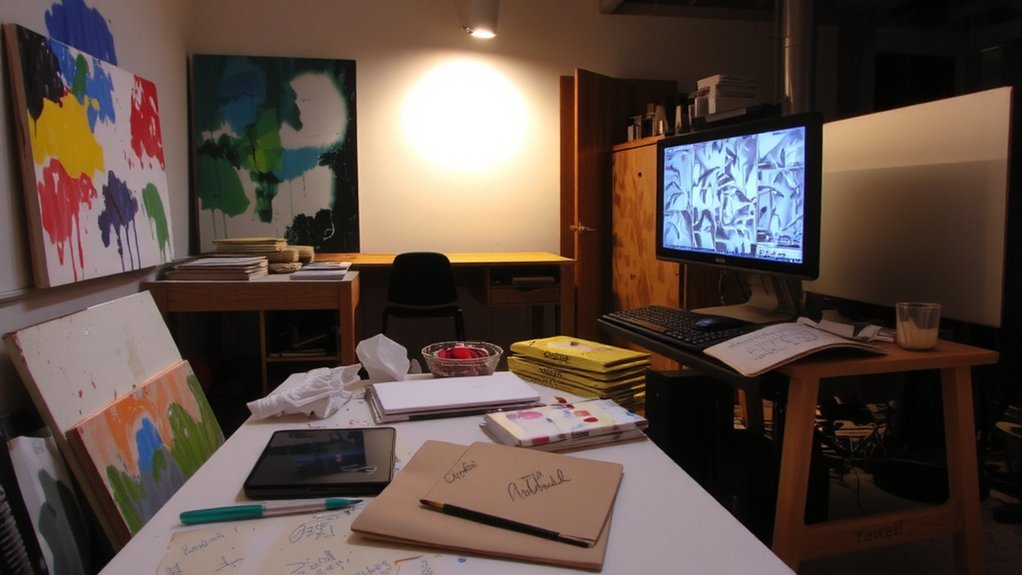
Although AI doesn’t think like you do, it can produce high-quality text, images, music, and code rapidly and at scale.
You can use models to draft marketing copy, generate concept art, compose background scores, and prototype software faster than traditional workflows.
In healthcare, algorithms support medical diagnostics by spotting patterns in scans and predicting risks, giving you data to act on sooner.
In logistics, AI drives supply optimization, routing shipments, forecasting demand, and cutting waste so you meet deadlines and budgets.
You’ll still guide goals, set values, and judge nuances, but you’ll leverage AI to handle repetitive, data-heavy tasks that free your time for strategy and craft.
Use these tools to extend what you can create, not replace what you value. Over time too.
The Limits of Machine Creativity
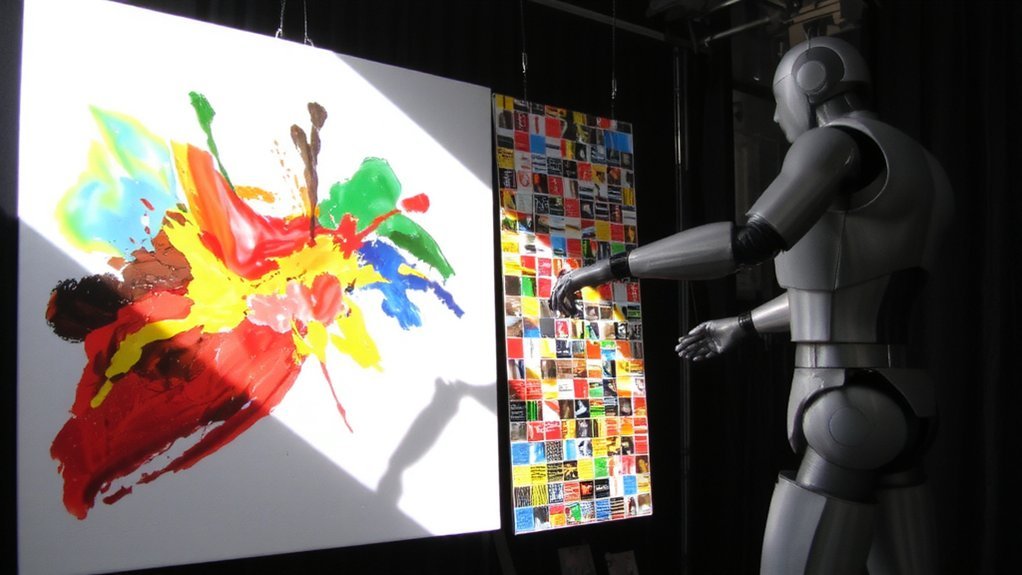
You can get impressive, polished work from AI, but it still struggles with the deeper aspects of creativity that hinge on intention, lived experience, and long-term meaning.
You’ll notice Algorithmic Bottlenecks when models prioritize statistical likelihood over surprise, producing safe outputs that mimic novelty without true innovation.
You depend on training corpora, so Data Limitations shape what the model can imagine; gaps, biases, and historical artifacts constrain its creative reach.
You can push models with prompts and fine-tuning, yet they recycle patterns rather than originate paradigms.
You should treat AI as a collaborator that accelerates craft but won’t autonomously redefine cultural frameworks.
You’ll get tools that amplify ideas, not a substitute for the judgment only humans provide.
Human Elements Machines Struggle to Replicate
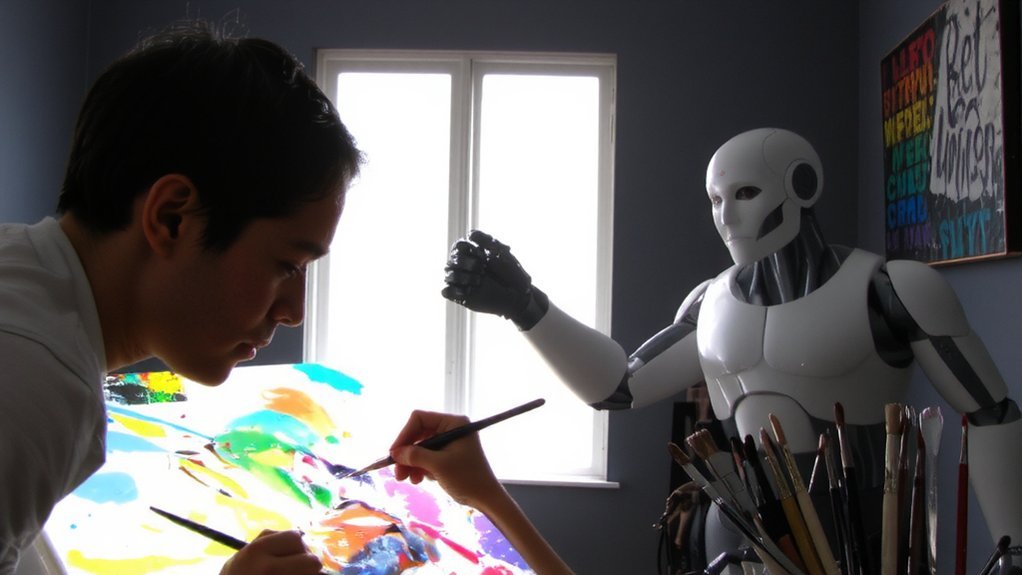
You see that AI can mimic patterns but can’t capture the subtle emotional nuance people weave into their work.
You bring embodied experience—sensory memories, bodily gestures, and lived context—into creativity in ways machines can’t fully reproduce. That gap shapes what you value in human-made art and makes collaboration, not replacement, more plausible.
Emotional Nuance
How do we measure the quiet shadings of feeling that make a poem ache or a song feel honest? You notice subtleties—hesitations, micro-tensions, cultural hints—that machines struggle to encode.
You rely on nuance mapping that threads context, memory, and contradiction into a single line; you perform empathy calibration constantly, sensing which detail will land and which will wound.
AI can mimic patterns, but it can’t yet inhabit histories, moral ambivalence, or the private contradictions that lend art its unpredictable truth.
When you create, you choose omissions, accidental phrasing, and risky sincerity.
Those choices carry social stakes and personal history that algorithms don’t possess, so your emotional judgment remains central to authentic, affecting work. You’ll keep refining the subtleties machines can’t yet replicate.
Embodied Experience
When you write or perform, posture, breath, scent, and lived scars shape meaning in ways algorithms can’t simulate. You inhabit context: a hesitant pause, a calloused fingertip, the memory of a stage’s floor.
Your kinesthetic perception guides timing and emphasis; subtle weight shifts alter phrasing. Machines analyze patterns but can’t feel gravity in your limbs or the ache that informs a line.
Tactile memory—how a pen drags, how fabric resists—anchors choices that code can’t truly recall. You translate bodily history into nuance, improvising when circumstances change.
That embodied intelligence produces originality rooted in experience, not only data. So while AI aids craft, your living body supplies irreducible signals that sustain authentic creativity. No simulation captures the lived grammar of your hands, breath, and mind.
Collaborative Creativity: Humans and AI Together
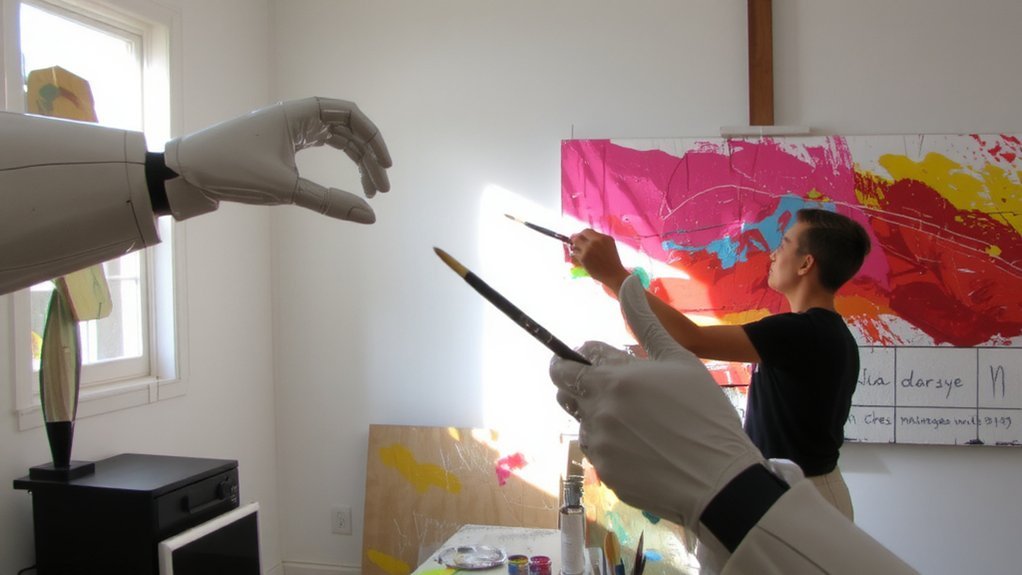
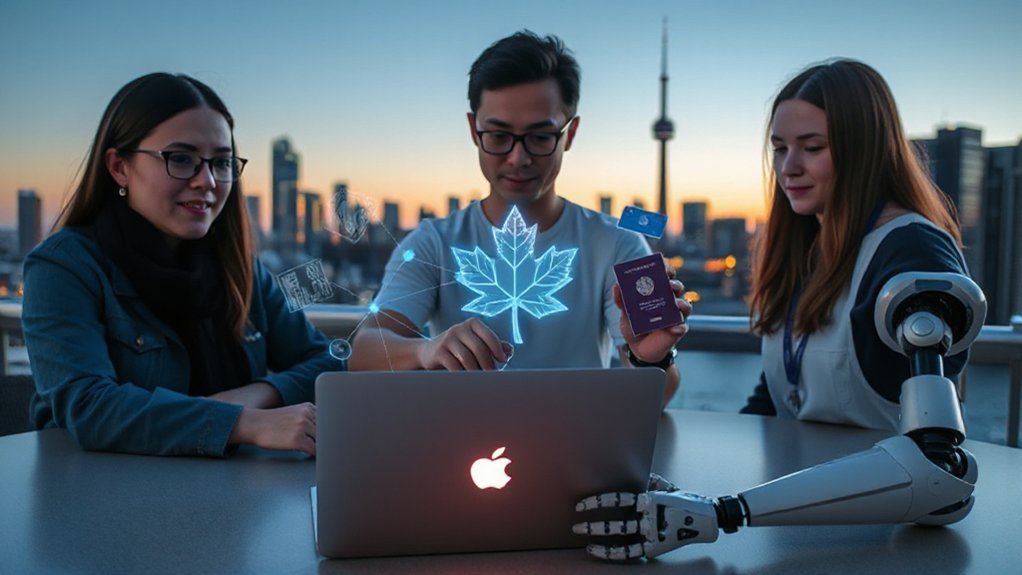
You can use AI to augment your creativity, generating rapid idea variants and unexpected connections.
In co-creation workflows, you guide direction while AI handles iterations, so you keep control of meaning and intent.
Together you and AI form a feedback loop that speeds experimentation and refines ideas into stronger outcomes.
Augmented Human Creativity
Pairing human intuition with AI’s pattern-finding power lets you push creative boundaries without handing over control.
You use interface design to shape interactions so suggestions feel like prompts, not prescriptions.
AI offers cognitive scaffolding: it surfaces associations, drafts variations, and highlights gaps, helping you iterate faster while you decide direction.
You’ll stay in charge of meaning, context, and ethical judgment, using AI to extend memory, test reversals, or recombine motifs.
That amplification breeds novel ideas you mightn’t reach alone, yet keeps responsibility where it belongs.
To benefit, set guardrails, seek transparency about models’ limits, and treat outputs as materials you refine.
Augmented creativity turns AI into an intelligent tool that intensifies, not erases, your authorship.
You’ll learn faster, and your craft will improve.
Co-Creation Workflows
Collaborating with AI reshapes creative workflows: you define intent, the system proposes options, and you curate and refine what matters.
You’ll set Role mapping early, assign tasks between human insight and algorithmic generation, and keep responsibility clear.
Use Version control to track iterations, revert choices, and audit changes.
Feedback loops tighten quality, and you steer aesthetics and ethics.
- Set clear goals and constraints
- Assign roles: creator, editor, verifier
- Use version control for traceability
- Review AI suggestions, accept or adapt
- Close the loop with user testing
You maintain authorship while AI accelerates exploration, ensuring final work reflects human judgment.
Document decisions, measure outcomes, and iterate rapidly; your critical choices shape impact, preserve intent, and build trust with audiences and stakeholders over time, transparently, and measurably.
Ethical and Cultural Implications
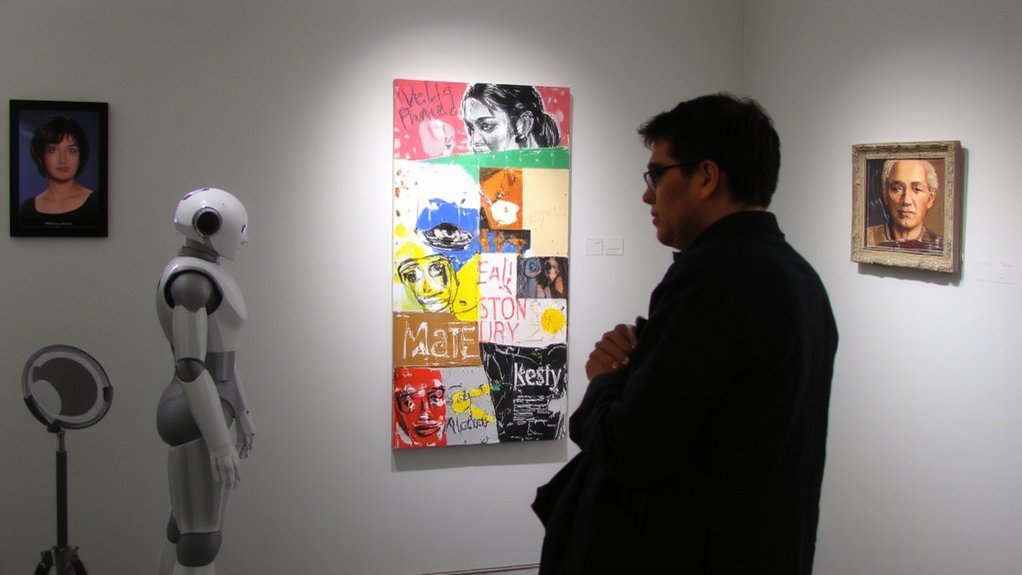
How should societies balance AI’s creative power with cultural values and ethical norms?
You’ll need to question who benefits when algorithms generate art, music, or narratives, and whether cultural homogenization erodes local traditions.
You should insist on transparent attribution and defend creative ownership so makers receive recognition and remuneration.
You must examine bias baked into models that can misrepresent communities or amplify stereotypes.
You can demand provenance, consent from source communities, and limits on exploiting marginalized creators.
Regulators and platforms should set clear disclosure rules and dispute processes that respect cultural heritage.
As you evaluate AI’s role, prioritize dignity, diversity, and accountability to guarantee creativity serves people rather than erasing their voices.
You should demand ongoing public dialogue about values, rights, and consequences regularly.
Preparing for a Creative Future
Preparing for a creative future means reshaping education, workplace training, and policy so you can use AI as a tool—not a replacement—for human imagination.
You’ll need practical skills, critical judgment, and emotional intelligence to guide AI and amplify your ideas.
Prioritize education redesign that emphasizes creativity, collaboration, and adaptable problem solving.
Support career shifts with reskilling, mentorship, and portable credentials so people move into roles that leverage AI.
Foster policy that protects creative rights and encourages experimentation.
- Teach interdisciplinary thinking
- Offer modular microcredentials
- Create public-private retraining programs
- Protect IP and authorship rights
- Promote inclusive access to tools
Act now: build partnerships, fund experiments, and measure outcomes to guarantee equitable benefits for everyone everywhere too.
You can shape systems that make creativity resilient and human-centered.
Conclusion
You won’t lose creativity to AI; you’ll redirect it. AI will speed tasks, spark ideas, and widen options, but it won’t feel, intend, or live your stories. You’ll stay in charge of meaning, ethics, and judgment, designing how tools get used. To thrive, you’ll adopt new workflows, insist on safeguards, and learn continually so technology amplifies rather than erases the human heart of art. You’ll shape a fair, inclusive creative future together with machines today.