
Ethical AI: Balancing Innovation and Responsibility
November 8, 2025
AI in Customer Service: Real-World Examples That Drive ROI
November 8, 2025
By 2025, AI isn’t just automating tasks; it’s reshaping how you work, who you work with, and which skills pay. You’re seeing hybrid human–AI workflows, smarter hiring platforms, continuous upskilling, and new regulatory demands. These shifts change career strategies — and the consequences for your role are only getting started.
Key Takeaways
- Routine tasks are automated, shortening lead times while shifting human labor toward higher‑value, judgment‑driven work.
- Human–AI hybrid roles emerge, with humans retaining final decisions and models supplying rapid analysis and suggestions.
- Demand shifts to AI literacy, prompt engineering, and continuous upskilling, with microcredentials and on‑the‑job learning becoming essential.
- Smarter platforms match skills to work globally, enabling remote distribution, faster hires, and reduced geographic pay disparities.
- Compensation concentrates on high‑skill roles, increases variable pay, and triggers stronger regulation for transparency, audits, and data consent.
Automation of Routine Tasks Accelerates Productivity
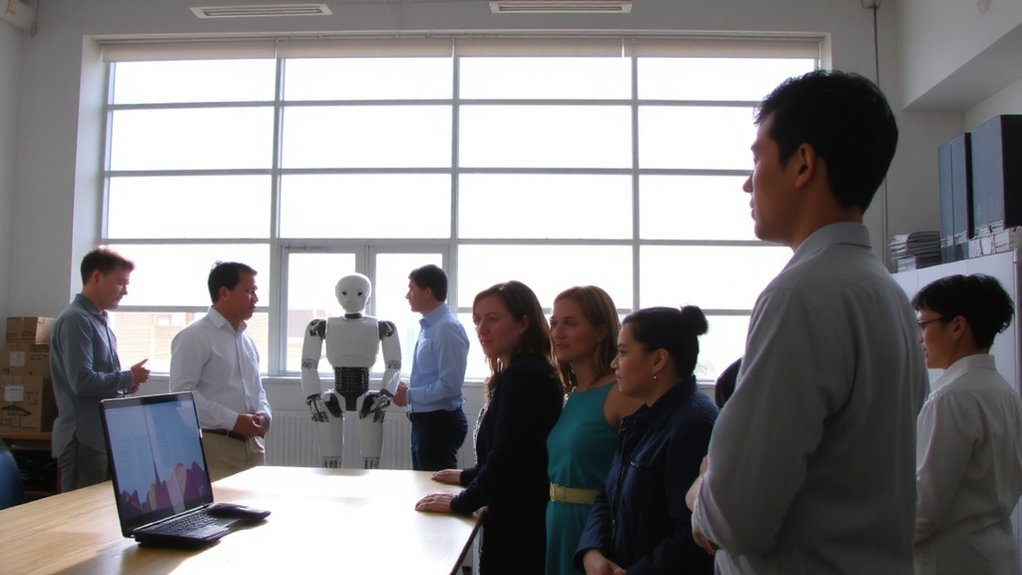
When AI takes over repetitive tasks, you free people to focus on higher-value work, which boosts throughput and shortens cycle times.
You’ll see routine data entry, scheduling, and basic analysis handled continuously, so projects move faster without idle handoffs.
That cycle compression cuts lead times and makes delivery predictable.
Automated checks also drive error reduction, catching inconsistencies before they cascade.
Because you’re reallocating human effort to problem-solving and creativity, team morale and output improve.
You can redeploy staff to customer engagement, complex decision-making, and strategic initiatives that machines can’t own.
Measure gains through throughput, quality, and turnaround metrics, then iterate on automation scope.
Keep governance tight to avoid blind trust in algorithms while sustaining steady productivity growth, and keep stakeholders regularly informed about performance.
Rise of Hybrid Human–Ai Roles and Workflows

You’ll see jobs reconfigure into human–AI collaborative teams where people handle judgment, context, and relationships while AI handles data processing and pattern recognition.
You’ll need new skills—prompting, model oversight, interpreting AI outputs, and translating them into business decisions—to work effectively in these hybrid workflows. Organizations will redesign roles and training to pair human strengths with AI capabilities and keep accountability clear.
Human–AI Collaborative Teams
As AI handles routine analysis and drafts, teams are reorganizing around hybrid roles that pair human judgment with algorithmic speed.
| Role | AI Task | Human Task |
|---|---|---|
| Analyst | Data prep | Contextualize |
| Designer | Generate options | Evaluate |
You’ll navigate trust dynamics and ownership ambiguity as AI contributes suggestions and humans decide. You’ll set clear decision gates, feedback loops, and accountability so outputs don’t drift. Teams embed AI as teammate, not tool, so you negotiate responsibilities daily. Experimental pilots reveal faster delivery and safer outcomes when roles are explicit. Use metrics that track human override, model confidence, and outcome traceability to keep workflows transparent. That clarity helps you resolve disputes and scale hybrid collaboration without sacrificing responsibility. You should institutionalize review cadences and legal checks to protect users and clarify liability across teams and clear expectations.
Skills for Hybrid Workflows
Clear role definitions and review cadences set in hybrid teams lead directly to new skill demands: you’ll need stronger data literacy, prompt and model evaluation skills, and the judgment to balance algorithmic suggestions with human priorities.
You’ll learn to segment your day with time segmentation—allocating blocks for model interaction, creative thinking, and stakeholder review—so AI doesn’t dictate your workflow.
You must practice input curation: choosing precise prompts, cleaning data, and filtering outputs before human decisions.
Develop quick verification routines, bias checks, and explainability queries to validate recommendations.
Communicate expectations clearly to teammates and document when you override or accept AI suggestions.
Those habits let you steer hybrid workflows safely, improve outcomes, and keep accountability where it matters.
You’ll also upskill in tool orchestration securely.
Shift in Valued Skills Toward Creativity and AI Literacy

Because AI handles routine work, employers now prize creativity, critical thinking, and AI literacy—you’ll need to blend imaginative problem‑solving with the skill to direct, evaluate, and collaborate with AI tools. You should cultivate artistic cognition and narrative fluency to shape ideas, critique outputs, and craft compelling messages. Practice prompt design, iterative testing, and ethical judgment so you guide models rather than follow them. Employers reward adaptability and domain insight paired with technical literacy in model capabilities. Build portfolios that show concept-to-AI execution, highlight outcomes, and document your reasoning. Below is a guide.
| Skill | Why it matters | How you develop |
|---|---|---|
| Creativity | Differentiates human output | Cross-training, prototypes |
| AI literacy | Enables oversight of models | Courses, hands-on labs |
| Critical thinking | Validates AI suggestions | Case studies, peer review |
Geographic Redistribution of Work Through Remote AI Tools

You can tap global talent as remote AI tools let skilled workers contribute from anywhere.
That access is nudging regional wage convergence as employers compare candidates across locations.
You’ll also see local economic revitalization when remote incomes and AI-enabled startups boost smaller communities.
Global Talent Accessibility
As AI-powered collaboration and automation tools mature, companies can tap talent across time zones and borders, shifting work allocation from local offices to distributed specialists.
You’ll rely on AI-driven Language Translation to remove language barriers, letting you hire experts whose skills mattered more than native fluency.
You’ll use platforms that surface time-zone-friendly schedules, asynchronous handoffs, and automated documentation, so projects keep moving without constant meetings.
You’ll prioritize Cultural Inclusion in onboarding, using AI to adapt training and feedback to norms and values, reducing friction.
You’ll monitor outcomes by skills and deliverables rather than location, and invest in secure remote workflows, mentorship, and equitable access to tooling so distributed teams collaborate effectively and scale globally.
You’ll leverage analytics to identify skills gaps and optimize hiring.
Regional Wage Convergence
While remote AI tools spread tasks globally, they’ll push wages toward convergence across regions. You’ll see employers tap wider talent pools and offer pay closer to skill value than local market history, reducing extreme differentials.
As roles decouple from place, you’ll negotiate compensation against global peers, and platforms will benchmark salaries dynamically. Governments will face pressure to coordinate policies — tax harmonization will limit arbitrage, and pension standardization will protect workers who move across jurisdictions.
You’ll benefit from upward mobility in lower-cost areas and face stiffer competition in high-cost centers. Firms will balance cost savings with retention, while regulators adjust to guarantee fair minimums and portable benefits without erasing regional cost-of-living signals.
You should track compensation trends and advocate for transparent, portable benefit frameworks.
Local Economic Revitalization
Revitalizing local economies, remote AI tools let companies shift meaningful work to smaller cities and towns, bringing steady income, new service demand, and upskilling opportunities to places that lost jobs to automation or offshoring.
You can hire distributed teams, tap local talent, and reduce urban congestion while boosting rural purchasing power.
AI-driven platforms match skills to roles, support micro-entrepreneurship, and help creators monetize Cultural Festivals content or promote regional tourism.
Local governments partner with firms to invest in Green Infrastructure and broadband, attracting remote-first companies.
You’ll see coworking hubs, training centers, and supply chains tailored to local assets.
If you plan strategically, remote AI-enabled redistribution can restore tax bases, diversify economies, and keep work anchored in communities that need it most and thrive locally.
Smart Matching Boosts Freelancing and Gig Platforms
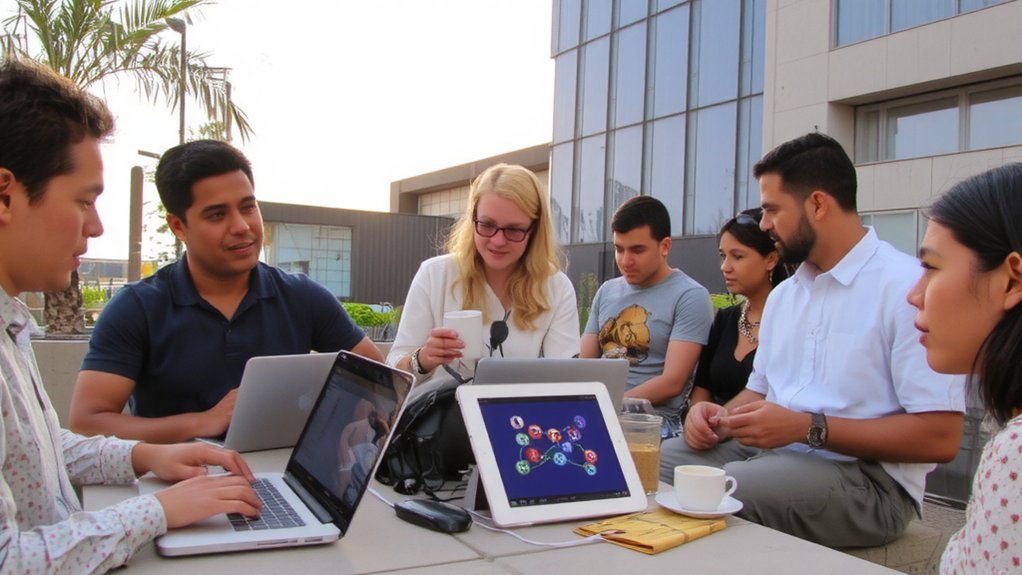
When platforms use smarter algorithms and real-time signals to match freelancers with gigs, you’ll see faster hires, better skill fits, and fewer mismatches.
You get personalized task suggestions based on portfolio nuances, availability and client context, so you spend less time browsing. Platforms leverage API interoperability to pull credentials, work history and ratings from other services, creating richer profiles and smoother onboarding.
Smart filters let you prefer price, turnaround or niche tools, while dynamic bundling and project bundling options combine related tasks into single contracts that reduce overhead.
Predictive timelines and transparent risk signals help you set realistic bids and avoid scope creep. Overall, you’ll navigate gig marketplaces more efficiently, win projects that match your strengths, and deliver with clearer expectations and grow faster.
Hiring Processes Reshaped by Algorithmic Screening
How will hiring change as algorithmic screening takes hold? You’ll see applicant flows filtered by AI that ranks resumes, flags mismatches, and enforces consistency in Credential Verification, so you won’t waste time on falsified claims.
Algorithms surface transferable skills, but you’ll also need to monitor bias and false negatives when niche talent gets deprioritized.
Recruiters will use dashboards to triage candidates, reducing Pipeline Bottlenecks by automating interview scheduling and initial assessments.
You’ll rely more on structured job descriptions so models score fairly, and you’ll set transparent thresholds to explain rejections.
Expect faster time-to-offer for routine roles and more human focus on culture fit and complex judgment calls that AI can’t yet replicate.
You’ll need governance and audit trails to guarantee accountability and continual improvement.
Continuous Upskilling Becomes Employment Currency
As AI accelerates hiring cycles and standardizes credential checks, you’ll need to treat ongoing learning as your primary labor-market asset. You can’t rely on a diploma to last: Credential Decay means skills you earned last year may be obsolete this year. So you prioritize bite-sized courses, microcredentials and on-the-job projects that prove current competence.
Employers and platforms expect demonstrable, refreshable evidence of ability, so you schedule regular reskilling and make learning visible on profiles. You’ll benefit from Learning Gamification—short challenges, badges and leaderboards that motivate practice and let algorithms rank real-time readiness.
Treat continuous upskilling like maintenance: set measurable goals, track refresh cycles, and rotate focus between core skills and adjacent capabilities to stay employable as AI reshapes demand, and seize emerging hybrid roles.
Wage Polarization and Changing Compensation Models
You’re seeing higher wages concentrate among high-skill workers as AI boosts demand for specialized talent.
Employers are shifting toward variable pay—bonuses, equity, and performance-based incentives—to tie compensation to outcomes.
Benefits are becoming more flexible and fragmented, so you may face greater income volatility and need to negotiate total rewards, not just salary.
Rising High-Skill Premiums
Because AI automates routine tasks, employers are paying a growing premium for workers who design, manage, and interpret intelligent systems.
You’ll find demand concentrated in a narrow set of roles—ML engineers, data scientists, AI ethicists—driving wage gaps that reward deep technical skill and domain fluency.
Firms build prestige monopolies around elite teams, using selective hiring and branded projects to justify outsized pay.
You’ll notice firms also use credentialing, internal ladders, and public achievements as status signaling to attract top talent and retain influence.
That raises barriers for lateral entrants and can widen inequality between high-skill specialists and everyone else.
To stay competitive, you’ll need targeted upskilling, portfolio evidence of impact, and strategic networking and visibility to access those premium roles and their career pathways.
Variable Pay and Benefits
Firms are increasingly shifting compensation toward variable pay and tailored benefits, amplifying wage polarization and reinforcing the premiums paid to elite AI teams—top engineers get equity and performance bonuses while others face gig-style contracts and thinner safety nets.
You’ll see top talent receive Outcome Bonuses tied to product metrics and long-term equity, which rewards risk-taking and locks in elite retention. Meanwhile, many workers are moved to hourly, contract, or revenue-share roles with minimal base pay.
Employers offer Flexible Allowances—learning stipends, childcare credits, remote stipends—to fragment compensation and target specific needs.
You must carefully navigate this patchwork: negotiate measurable targets for bonuses, prioritize benefits that offset income volatility, and build portable skills so you don’t get trapped in the low-security segment of the AI economy.
New Regulatory Pressures on Privacy and Accountability
As regulators tighten rules around data use and algorithmic transparency, you’ll face sharper compliance demands that affect hiring, product design, and data practices.
You’ll need to embed Algorithmic Auditing into development cycles to detect bias, document models, and prove fairness to auditors.
Your HR and legal teams will collaborate to create Consent Frameworks that record permissions, retention periods, and third-party sharing, reducing litigation risk.
Expect audits, fines, and certification requirements that change role descriptions: privacy engineers, compliance analysts, and audit-ready data stewards will be in demand.
You’ll update onboarding, vendor contracts, and version control to secure traceability.
By treating privacy and accountability as operational imperatives, you’ll limit exposure and open trust-driven market opportunities.
Plan budgets and training to meet evolving regulatory milestones quickly now.
Leadership Demands Evolve for Ai-Aware Management
When AI changes how work gets done, you’ll need leaders who pair technical fluency with human judgment—people who can set strategy, assess model risks, translate algorithmic limits for stakeholders, and coach teams through rapid change.
You’ll face new leadership tasks: balancing product velocity with Ethical stewardship and prioritizing Trust cultivation across teams. You’ll interpret model outputs, set guardrails, and make trade-offs clear. You’ll coach staff on reskilling and foster cross-functional collaboration. You’ll measure outcomes beyond efficiency—fairness, safety, and long-term impact. You’ll embed feedback loops, audit models, and communicate transparently with stakeholders. In short, you’ll lead with technical literacy and moral clarity.
| Focus | Action |
|---|---|
| Strategy | Set AI objectives |
| Risk | Assess and mitigate |
| People | Train and empathize |
| Governance | Define rules |
You’ll model accountability and inspire confidence.
Conclusion
You’ll need to adapt: AI will automate chores, create hybrid roles, and change what skills pay. You’ll have to keep learning, master AI tools, and embrace creativity and ethical thinking. You’ll benefit from remote opportunities and smarter matching, but watch shifting pay models and tighter rules. As a leader or worker, you’ll choose resilience by staying curious, building AI literacy, and shaping fair, accountable practices that let you thrive in this fast‑moving job market today.