2025 AI Index Report (Stanford HAI) for AI Developers
September 27, 2025AI Prompt Engineering: Write Better Prompts (With Examples)
October 3, 2025AI now moves faster than most treaty talks. Countries need a new way to talk about tech rules that change by the month.
Enter AI consulates. Think of them as smart, trusted AI tools that sit next to diplomats. They scan evidence, compare draft text, flag risks, and keep talks on track. They do the heavy lift on data so people can focus on choices.
This idea fits the moment. In late 2024, the UN backed new work on AI guidance. In 2024, the Council of Europe opened a global AI treaty for signature. Policy groups in 2025 report that AI already helps with data review, legal text, and translation in talks. The aid is real, and the need is clear.
With an AI consulate, a team can test treaty terms against live facts. It can check how a rule affects trade, safety, and rights across regions. It can spot weak parts and suggest plain fixes. It keeps a record so each side sees the same source trail.
This helps deals feel fair and sound. It makes it easier to agree on audits, safety tests, and data use. It gives smaller states more voice, since the tool levels the prep. It also helps align with company standards that shape the tech itself.
The post covers the core parts. What an AI consulate is, who runs it, and how to build trust. How it supports talks on AI safety, chips, cloud, and data. What guardrails are needed for bias, privacy, and security. What steps countries can take to pilot one in current forums. Readers will leave with a clear plan to use AI consulates to reach better tech treaties, faster.
What Are AI Consulates?
AI consulates are official AI systems that work beside diplomats. They act like permanent staff for talks on tech. They read, compare, check, and explain. They do it fast, with a clear record. People still decide. The tool helps teams see the facts in the same way.
Plain Definition
An AI consulate is a state-run AI service for talks. It stores policy facts, model tests, treaty text, and case law. It checks claims in real time. It shows sources and flags risk. It keeps a full audit trail that both sides can read.
Think of it as a staffed office, but in software. It has rules, owners, logs, and a budget. It supports many talks across topics like safety, chips, cloud, and data.
Core Capabilities
These systems handle repeat tasks that drain time. The list below shows the most common jobs.
- Text analysis: compare treaty drafts, spot gaps, and suggest clearer terms.
- Evidence checks: link each claim to sources and show confidence levels.
- Impact tests: run models on trade, safety, and rights across regions.
- Red teaming: stress test terms against edge cases and known exploits.
- Translation: align terms across languages without changing meaning.
- Version control: track edits, authors, and citations across sessions.
- Traceable outputs: every answer shows data paths and model settings.
A strong setup pairs these with human review. Humans guide prompts, confirm sources, and sign off.
Where They Sit in Government
Placement shapes trust and speed. Most teams slot AI consulates near existing policy hubs.
- Foreign ministry, to serve treaty leads and embassies.
- Science and tech agency, to source model tests and audits.
- Data protection or competition unit, to align with law and norms.
- National cyber center, to guard access and logs.
Each host sets roles, budgets, and guardrails. Cross-agency boards review risk and update rules.
How They Differ from Chatbots or Advisors
A chatbot gives quick answers. An AI consulate gives accountable analysis. It has owners, scope, and controls. It links outputs to sources. It stores a common record across sessions and teams. It supports both sides during talks, not just one office.
A good test is repeatability. If two teams run the same query, the result should match and cite the same trail.
Data, Security, and Audit
Trust rests on clear controls. The basics are simple but strict.
- Clear data tiers: public, partner-shared, and classified.
- Strong access control with logs, keys, and time limits.
- Model cards and test reports for every model in use.
- Red team reports on bias, privacy, and security risks.
- Tamper-evident records for all prompts and outputs.
- Third-party audits on both code and process.
Outputs need source links and a short risk note. That helps teams spot weak claims fast.
Roles and Accountability
People still run the show. The table maps who does what.
| Role | Human-led | AI-led |
|---|---|---|
| Policy intent | Set goals and red lines | N/A |
| Evidence review | Validate sources and weight | Rank and retrieve |
| Drafting | Write core terms | Suggest edits and compare text |
| Testing | Define scenarios | Simulate and score outcomes |
| Privacy and security | Approve access and sharing | Enforce guardrails and logs |
| Final sign-off | Approve text | N/A |
Clear roles cut blame games. They also speed repeat tasks.
Example Workflow in a Treaty Meeting
A simple loop keeps talks on track and on record.
- The chair sets the scope and uploads draft text.
- The AI consulate aligns terms with a shared glossary.
- It runs checks against laws, standards, and prior deals.
- It flags conflicts, vague terms, and high-risk clauses.
- Teams pick fixes from plain options with pros and cons.
- The system tracks who changed what and why.
- A fresh draft exports with sources and tests attached.
This loop reduces drift. It also lets small states keep pace with larger teams.
Guardrails That Build Confidence
Strong guardrails reduce fear and raise use. Focus on five items.
- Transparency: default to shareable sources and audit trails.
- Neutrality: avoid vendor lock-in and disclose model providers.
- Privacy: segment data and auto-delete after set windows.
- Security: limit outbound calls and monitor prompts for risk.
- Human control: require sign-off before any major change.
Each guardrail should have a short policy and a test plan.
What They Are Not
AI consulates do not make policy. They do not replace talks. They do not set norms on their own. They help people see the same facts, weigh options, and write clear text. That is the entire point.
How AI Consulates Boost Data Analysis in Treaty Talks
AI consulates give teams a clear view of fast tech shifts. They scan huge data flows, score what matters, and surface trends early. This helps negotiators test claims, frame trade-offs, and write text that fits current facts, not last year’s news.
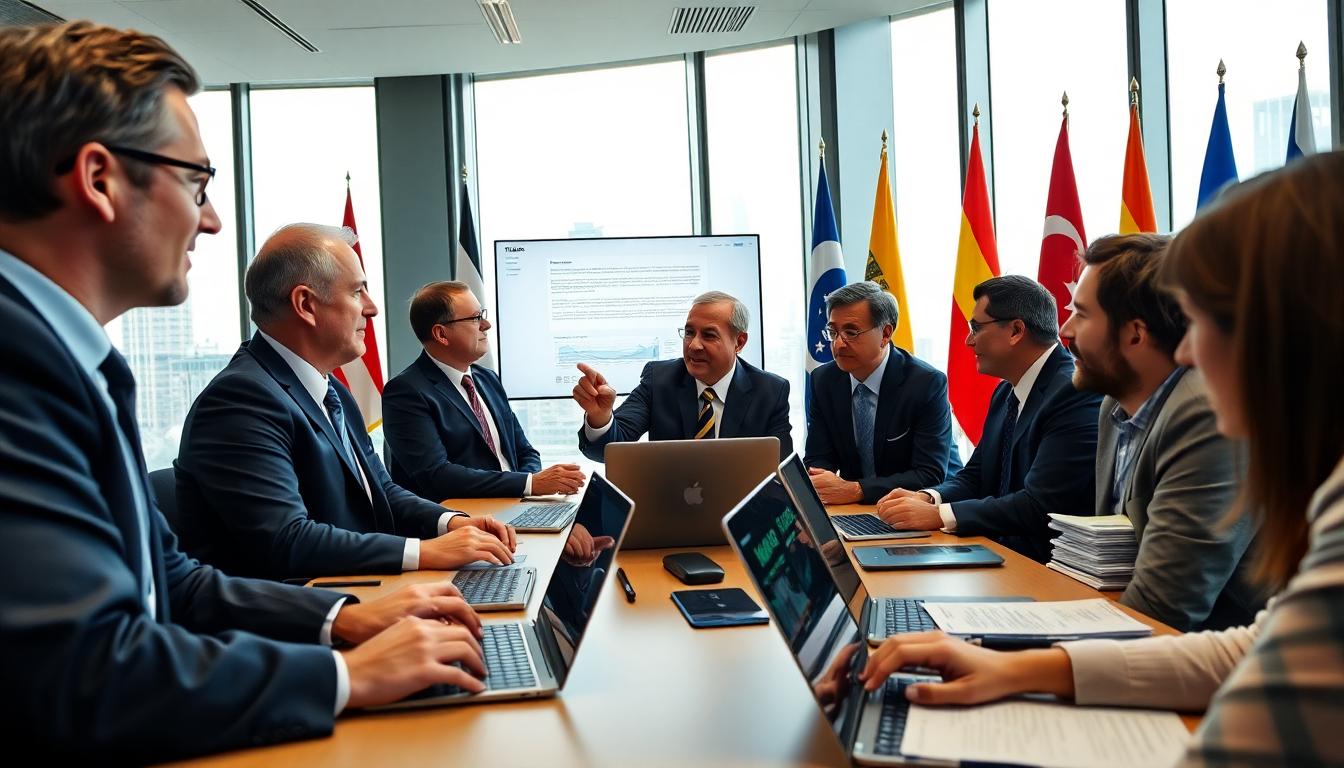
 Image created with AI: documentary style, genuine meeting setting with live data visualizations.
Spotting Patterns in Global Tech Trends
An AI consulate scans open news, research, policy blogs, and public posts. It clusters signals by topic and region. It flags spikes in interest, sudden dips, and new terms that show up across languages.
Here is how it works in practice:
- Stream intake: pull headlines, expert posts, agency notices, and think tank briefs.
- Pattern find: group similar topics and tag them, like privacy rules or chip export shifts.
- Source weight: rank sources by trust, recency, and track record.
- Alerting: send short notes when a trend passes a set threshold.
Everyday examples keep this clear:
- An AI spike in posts about “AI models trained on health data” across two regions. The system flags privacy risk, then points to past treaty text that lacked patient consent rules. Negotiators add a clear consent clause and a breach notice rule.
- A rise in posts about “AI misuse in elections.” The system links to prior guidelines and shows gaps on audit timing. Teams add audit windows to the oversight annex.
- A shift in tone on export controls for chips. The tool highlights likely supply impacts and offers a short memo with trade data.
Public view tracking matters in talks. Many teams use social and policy listening to see where public support sits. For context on how AI shapes global policy debates, see United Nations University’s overview of AI in international relations, which outlines risks, power shifts, and public signals in policy trends: AI and International Relations — a Whole New Minefield to Navigate (https://unu.edu/article/ai-and-international-relations-whole-new-minefield-navigate).
What makes this useful in the room:
- Clarity: a shared feed with topic cards and top sources.
- Speed: near real-time updates with noise reduced.
- Traceability: each insight links back to the source trail.
- Action: plain options, like “add a data minimization clause” or “define reporting cadence.”
Negotiators stay focused on text that reflects current risks, not old briefs. That keeps drafts tight and fair.
Predicting Partner Behaviors During Negotiations
Past behavior offers clues. AI models study prior votes, joint statements, reservations, and domestic laws. They map what a partner tended to support, delay, or reject. The output is not a verdict. It is a forecast with confidence scores and reasons.
A simple setup most teams use:
- Feature build: encode prior treaty votes, amendment patterns, and red lines visible in public records.
- Scenario runs: test how partners react to changes in scope, review boards, or audit rules.
- Signals of movement: show where wording shifts could unlock support, such as clear definitions or staged reviews.
This helps when talks touch rights and safety. Studies show AI can help frame choices in human rights debates, while still needing strict guardrails. See an academic review on AI’s role in human rights law for case studies and methods: Use of Artificial Intelligence in International Human Rights Law (https://law.stanford.edu/wp-content/uploads/2023/08/Publish_26-STLR-316-2023_The-Use-of-Artificial-Intelligence-in-International-Human-Rights-Law8655.pdf). For live treaty context, see summaries of the Council of Europe AI treaty, which places human rights at the center of governance: The World’s First Binding Treaty on Artificial Intelligence (https://fpf.org/blog/the-worlds-first-binding-treaty-on-artificial-intelligence-human-rights-democracy-and-the-rule-of-law-regulation-of-ai-in-broad-strokes/).
Practical tie-ins to the room:
- Human rights clauses: if a partner backed strong privacy rules before, the model predicts support for impact assessments and remedies.
- Audit design: a state that resisted broad audits may accept staged audits with clear scope.
- Export controls: a partner that tied controls to national security may trade scope for stronger transparency.
A short example makes this clear. A team proposes a rule that requires human rights impact reviews for high-risk AI systems. The model predicts that State A will support this if the review has simple templates and a timeline. State B may accept if reviews are limited to defined risk categories. Negotiators adjust terms and add a two-year review clause. The model raises its likelihood score, and the team runs with it.
Three best practices keep forecasts helpful:
- Keep humans in charge: analysts test model claims against fresh facts.
- Expose reasons: show the data that drove the forecast.
- Update fast: retrain when partners issue new policy notes or legal changes.
These steps align with recent research that reviews how AI affects decision-making in international relations and the need for strong due process: AI Technologies and International Relations: Do We Need New Governance? (https://pmc.ncbi.nlm.nih.gov/articles/PMC11575148/) and Legal and human rights issues of AI: Gaps, challenges and paths forward (https://www.sciencedirect.com/science/article/pii/S2666659620300056).
The goal is simple. Use AI to reduce blind spots. Use history to predict likely moves. Then write terms that meet shared aims without guesswork.
Steps Countries Can Take to Build AI Consulates
Countries can stand up AI consulates with a clear plan, tight guardrails, and tools that fit real diplomatic work. Start small, prove value in one forum, then scale. The steps below show how to build software, train people, and set rules that keep talks safe and fair.
 Image created with AI: documentary style, working group testing AI tools during a policy session.
Develop Custom AI Tools for Diplomacy
Start with practical software that saves time on day one. The goal is simple. Give negotiators fast, clear support without adding noise.
Build three core modules that work together:
- Scenario planning engine: run what-if tests on draft clauses. Show likely partner reactions, risk points, and trade impacts. Use structured inputs, like clause type, scope, review cycles, and audit strength.
- Real-time brief assistant: summarize live sessions, track edits, and map each claim to sources. Offer short fix options with plain pros and cons.
- Negotiation modeling system: forecast outcomes with confidence scores, then list reasons. Draw on prior votes, public statements, and treaty history.
What this looks like in use:
- The team uploads a draft annex on AI audits.
- The tool checks fit with past deals and national laws.
- It runs three scenarios: broad audit, staged audit, and audit by request.
- The model shows which states move under each option, and why.
- The chair picks a path and exports text with a source trail.
Keep the stack simple and modular:
- Use retrieval that cites sources. Store the trail for each answer.
- Log all prompts, settings, and outputs with timestamps.
- Switch models by task. Use translation models for language work, and policy-tuned models for text checks.
- Add privacy by default. Strip personal data unless the task needs it.
Why this saves time:
- Fewer side emails to chase old briefs.
- Faster alignment on terms across languages.
- Clear options reduce churn in drafting sessions.
A quick note on realism. Research in 2025 stresses AI as support, not a replacement, in talks. See Diplo’s view on how AI helps with analysis and reporting while humans lead engagement: Why will AI enhance, not replace, human diplomacy? (https://www.diplomacy.edu/blog/why-ai-will-enhance-not-replace-human-diplomacy/). Similar points appear in public diplomacy reviews that show AI aids complex talks without taking judgment away: Rethinking Diplomatic Negotiations in the Age of AI (https://uscpublicdiplomacy.org/blog/rethinking-diplomatic-negotiations-age-ai).
Build with guardrails from day one:
- Label confidence and data gaps in every output.
- Require human sign-off for text that enters the official draft.
- Block the tool from sending emails or making changes without approval.
Train Diplomats to Work with AI
People keep control. Training makes that real. The program should be short, hands-on, and repeatable.
Focus on five core skills:
- Prompting with intent: teach staff to set scope, define terms, and ask for sources.
- Source checks: verify claims fast. Teach staff to check citations and compare across trusted databases.
- Risk notes: read model risk labels and act on them. If the tool flags bias risk, staff must escalate or adjust.
- Scenario reading: treat forecasts as signals, not orders. Analysts must explain why a change helps.
- Final authority: the chair or lead negotiator makes the call. The AI does not.
Program design that works in practice:
- Short bootcamps, 2 to 3 days, with real treaty text.
- Live drills, like drafting a privacy clause in 30 minutes using the tool.
- Red team sessions, where trainees try to break the model or expose bias.
- Clear roles, so each person knows when to trust, test, or pause.
Training should use real cases:
- A deepfake rumor hits mid-talks. Teams practice source tracing and response lines.
- A partner shifts on a rights clause. Analysts test new wordings and present two fixes.
Reports in 2025 echo this human-first stance. AI helps with data load, summaries, and simulations, while humans handle trust, tone, and final judgment. See the summary backed by recent research, which highlights AI as an aid to diplomacy, not a replacement: How AI can build bridges between nations, if diplomats use it wisely (https://www.eurekalert.org/news-releases/1095943) and AI DIPLOMACY: geo-politics, topics and tools in 2025 (https://www.diplomacy.edu/topics/ai-and-diplomacy/).
Helpful training rules:
- Ban automated decisions on policy positions.
- Require a short human note on any AI-suggested change.
- Track who approved each AI-assisted edit, and why.
Set Rules for Fair and Safe AI Use
Clear rules build trust across borders. They also keep talks aligned with law and rights.
Adopt a simple policy pack:
- Data use and privacy: set data tiers, retention, and consent rules. Treat personal data with strict limits. Use privacy by design in every module.
- Bias and fairness: test for bias before and during talks. Publish results to partners when shared data is used.
- Transparency: label AI-generated content and show model cards on request. Attach source trails to all outputs.
- Human oversight: require a named official for each decision. Document the choice and the evidence behind it.
- Security: isolate sensitive prompts, control outbound calls, and monitor for prompt injection.
Link these rules to live efforts:
- The Council of Europe’s international AI treaty centers on rights, democracy, and oversight, with requirements to label AI-generated content and manage risk: International AI Treaty (https://www.caidp.org/resources/coe-ai-treaty/).
- UNESCO’s ethics work stresses fairness, privacy, and non-discrimination across the AI life cycle: Ethics of Artificial Intelligence (https://www.unesco.org/en/artificial-intelligence/recommendation-ethics).
- The EU AI Act adds a risk-based model with bans on certain uses and strict controls for high-risk systems. It also requires transparency and human oversight as default practice: AI Regulations in 2025: US, EU, UK, Japan, China & More (https://www.anecdotes.ai/learn/ai-regulations-in-2025-us-eu-uk-japan-china-and-more).
To make rules real in a treaty room:
- Publish a short AI use policy that both sides can read.
- Share audit summaries on bias tests for models used in joint sessions.
- Add a clause in the terms of reference that says humans sign off every change.
A simple compliance loop keeps the system honest:
- Pre-meeting checks on data, model versions, and access lists.
- Live logging of prompts and outputs with reason codes.
- Post-meeting review to prune data, fix flags, and update model cards.
 Image created with AI: documentary style, human sign-off with transparent logs in a policy setting.
Real Examples of AI in Tech Treaty Negotiations
Practical use beats theory in treaty rooms. These examples show how AI already supports talks on rights, trade, chips, and safety. Each case highlights one clear method, one output, and one lesson teams can reuse.
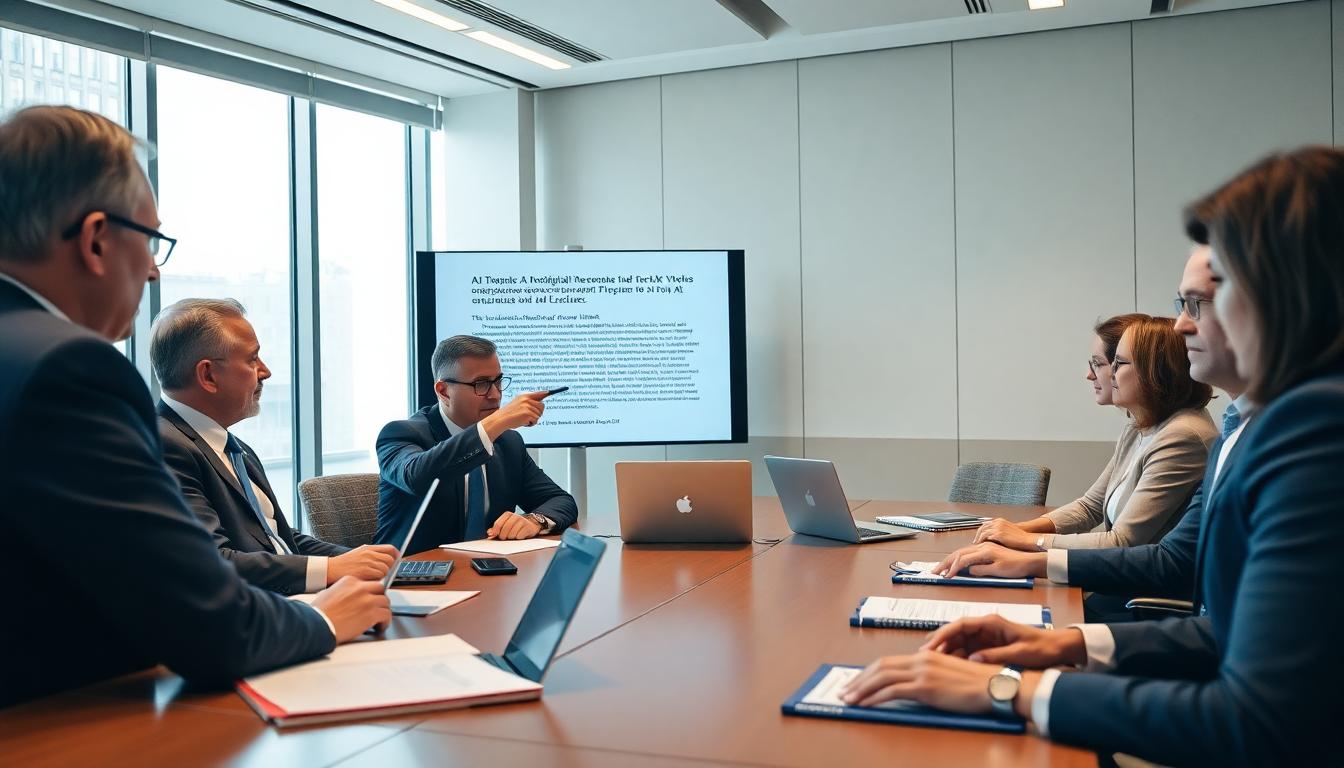 Image created with AI: documentary style, policy team reviewing AI analysis of draft text.
Council of Europe AI Convention: Clause Comparisons and Rights Checks
Teams used AI tools to compare draft clauses with rights law and past deals. The tools flagged vague language and showed which remedies fit human rights tests.
What the system did well:
- Mapped each clause to sources in case law and guidance.
- Highlighted vague words, then suggested clear terms.
- Checked that transparency rules met rights standards.
- Tracked edits and who approved changes.
Why it mattered:
- Drafts moved faster to human review.
- Partners agreed on definitions and risk levels.
- The record eased trust across delegations.
 Photo by Werner Pfennig
Caption: EU policy session where AI-backed analysis supports clause alignment.
US–China Risk Dialogues: Scenario Runs and Glossary Alignment
Rival states still need shared facts. AI models ran short scenarios on safety topics and mapped terms with plain-language glossaries.
How it played out:
- Scenario runs showed how each audit step might be read.
- Glossary tools aligned key terms across both languages.
- Notes exposed red lines so chairs could steer talks.
- Short briefs focused minds on testable options.
Results seen in the room:
- Fewer disputes over meaning.
- Tighter scope on safety tests.
- Documented assumptions that carried into the next round.
WTO Trade Work: AI Briefs for Smaller Delegations
Trade talks contain dense data and fast shifts. AI brief tools helped small teams track proposals, tariffs, and supply risks in near real time.
Helpful features:
- Daily summaries with source links.
- Alerts on new text that changed market impact.
- Simple charts for trade flows tied to clauses.
- Translation that kept meaning intact.
Impact on talks:
- More states joined complex side sessions.
- Chairs got clear options with costs and gains.
- Draft text matched current trade data.
Election Integrity Annexes: Deepfake Response Protocols
Several talks added media integrity terms. AI detection dashboards informed timelines, notice rules, and evidence standards.
What the AI flagged:
- High-risk windows near votes.
- Likely vectors for false content.
- Detection limits and false positive rates.
What negotiators wrote:
- A 24-hour notice rule for flagged content.
- Clear lab testing before major claims.
- A joint review team with time-boxed tasks.
Key lesson: tie rules to tested detection limits and publish those limits.
Chips and Compute Governance: Impact Tests and Safe Thresholds
Export controls and compute rules are hard to scope. AI models tested how clause changes could shift supply, costs, and compliance risks.
Useful outputs:
- Sensitivity tests for compute thresholds.
- Supply chain maps that revealed choke points.
- Country-by-country compliance cost estimates.
- Options for staged reviews tied to model tests.
Why it worked:
- Data-backed thresholds beat guesswork.
- Staged reviews built in flexibility.
- Shared visuals made trade-offs clear.
Cross-Border Data Transfers: Risk Scoring and Remedy Paths
Data transfer talks rely on proof, not trust. AI tools scored risk by sector, then mapped remedies that fit rights law.
Tangible gains:
- Risk scores with clear inputs and weights.
- Standard remedies, like audits and breach notices.
- Templates for impact assessments with time limits.
- Citations for each claim in the draft text.
Outcome: faster agreement on baseline safeguards and review cycles.
A Quick Snapshot of Impact
A short table helps tie cases to outcomes.
| Case | AI tasks used | What changed in the draft |
|---|---|---|
| Rights-centered treaty text | Clause comparison, rights checks | Clearer definitions and strong remedies |
| Safety dialogues | Scenarios, glossary alignment | Shared terms and staged audits |
| Trade sessions | Live briefs, translation | Data-aligned clauses and wider input |
What Worked Across Cases
A few patterns showed up in each room:
- Traceable sources: every claim linked to data and law.
- Short options: two or three edits beat long memos.
- Human sign-off: chairs owned the final call.
- Time-boxed tests: quick trials kept talks moving.
- Reset points: staged reviews made change safe.
Common pitfalls to avoid:
- Overload from too many model outputs.
- Vague risk labels that hide bias or gaps.
- Unclear ownership of edits and sources.
How Teams Can Reuse These Moves
These steps fit most treaty rooms:
- Start with one clause, not the whole draft.
- Ask the tool for two fixes, with pros and cons.
- Require sources and a short risk note.
- Log edits and who approved them.
- Add a review clause tied to fresh tests.
One more tip: retire models that fail bias or security checks. Keep the audit trail, switch tools, and move on.
Challenges of AI Consulates and Ways to Fix Them
AI consulates promise cleaner drafts and faster talks. They also bring new risks that can skew deals or expose secrets. The fixes are practical. They rely on clear data rules, sound audits, and human control at key points.
The path is not guesswork. Standards like the NIST AI RMF, ISO/IEC 42001, and the EU AI Act point to strong controls. The Council of Europe AI convention stresses rights and oversight. UN forums urge shared norms and risk checks. These give teams a stable base to act with care and speed.
 Image created with AI: documentary style, policy team reviewing AI risks and mitigations in a working session.
Handling AI Biases in Sensitive Talks
Bias can warp a deal. If training data is skewed, the model can favor one region, language, or interest group. That can tilt clause wording, risk scores, or even which sources show up first. In a treaty room, that can cost trust and stall progress.
Teams can control this with tight checks and diverse data:
- Use balanced training sets. Mix legal texts, public policy, case law, and civil society input across regions and languages. Do not rely on one bloc or one vendor corpus.
- Apply subgroup bias tests. Score outputs by country, language, and stakeholder type. Look for gap size and direction, not just averages.
- Add counterfactual data. Create paired examples that flip sensitive attributes, then check if outputs change without good reason.
- Reweight sources by provenance and recency. Prefer vetted public law, signed statements, and peer-reviewed work. Mark blog or social content as low trust.
- Run red team reviews with outside experts. Include civil groups and smaller states. Pay attention to where the model underserves them.
- Use prompt rules that force balance. Ask the model to cite divergent views and show why it ranked sources.
- Calibrate outputs with confidence and risk notes. Each answer should show a score, gaps, and the data path.
- Keep human adjudication for contested points. A named reviewer must approve any text that shifts rights or enforcement.
A simple daily loop keeps bias in check:
- Pull new data with source tags and region tags.
- Run bias tests on sample tasks, like clause edits or risk scores.
- Flag gaps that pass a set threshold.
- Add data or adjust weights.
- Log actions and share a short bias note with partners when outputs are shared.
Tie fixes to known norms. The NIST AI RMF calls for traceability and risk controls. The EU AI Act requires transparency and human oversight for high-risk use. The Council of Europe AI convention centers on rights and remedies. These map well to bias testing and shared audits.
Practical signs the setup is working:
- Even recall across languages. A French brief and an English brief surface the same core sources.
- Clear dissent in the output. The tool lists two valid views, not one favored path.
- Fewer reversals in later rounds. Early bias tests prevent late draft churn.
If a model fails repeated tests, retire it. Keep the audit trail, switch models, and move on.
 Image created with AI: documentary style, analysts review fairness dashboards for treaty support tools.
Protecting Sensitive Info in AI Systems
Diplomacy runs on trust. A leak or breach can wreck talks. AI adds new attack paths, from prompt injection to model supply chain risks. Strong security must be baked in from day one and tied to global standards that treaty teams know and accept.
Start with strict data handling:
- Data tiers. Mark public, partner-shared, sensitive, and classified. Block model training on sensitive or classified content.
- Zero trust access. Use strong identity checks, short-lived tokens, and per-session keys. Log every read and write.
- On-prem or sovereign cloud for core tasks. Keep sensitive prompts and outputs in a controlled zone.
- Confidential computing for inference. Use hardware-backed memory protection where possible.
- Encryption at rest and in transit. Rotate keys to a schedule, with dual control on key use.
- Data minimization by default. Strip personal data unless needed for the task.
Harden the model and the pipeline:
- Supply chain checks. Keep a software bill of materials and model provenance records. Verify signatures on model files.
- Prompt injection defenses. Sanitize inputs, block hidden instructions, and use outbound call guards.
- Content filters tuned for policy work. Stop the model from exposing secrets or accepting sensitive content from unknown sources.
- Shadow mode for new features. Test with dummy data before live use in talks.
- Rate limits and anomaly alerts. Catch scraping, mass downloads, or odd query bursts fast.
Align with widely used frameworks so partners can trust the setup:
- NIST AI RMF for risk and governance.
- ISO/IEC 27001 for security controls.
- ISO/IEC 23894 and 42001 for AI risk and management.
- EU AI Act requirements for high-risk systems, like logging, human oversight, and clear user notices.
- UN work on AI norms and defense risks, which urges transparency and shared safeguards.
Build shared oversight into the treaty process:
- A joint security board with named contacts from each side.
- Pre-meeting checks on model versions, access lists, and logging.
- Live session logs with time stamps, redactions, and reason codes.
- Third-party audits on controls and data flows, shared as short summaries.
- Incident response with 24-hour notice windows and forensics plans.
Helpful practice in the room:
- Run sensitive queries on an air-gapped instance. Export only the final text and a source list.
- Use federated queries when data cannot move. The model sends the task to each side, returns only aggregate results.
- Set retention windows. Purge drafts and prompts that are no longer needed.
Good security speeds talks. Clear controls ease data sharing. Logs cut disputes over who saw what and when. The result is simple. People trust the tool and focus on the text.
Conclusion
AI consulates help teams see the same facts, at the same time. They speed up drafting, surface risks, and keep a clean record. They support smaller states and reduce guesswork for all. With clear logs, bias checks, and human sign-off, they turn noise into useful options.
Leaders should act now. Stand up a pilot in one forum. Publish plain rules on data, bias, and review. Train staff on prompts, source checks, and final approval. Share audit notes with partners to build trust. Start with one clause, then grow by proof, not hype.
These tools can anchor fair tech rules across borders. They make room for rights, safety, and trade to fit together. They also give space to update terms with live tests and staged reviews. That is how treaties stay honest and useful.
The next step is simple. Pick a priority topic, such as audits or data use. Set a short timeline and clear success tests. Invite partners to review the setup and the logs. Then publish what worked, and what did not, so others can reuse it.
If governments adopt this model, talks will move faster and land on firmer ground. People will see how choices were made, and why they matter. That is a solid path to fairer global AI rules, and better outcomes for everyone.
