

AI Consulates 10 year from today
September 26, 2025AI Consulates vs. Traditional Consulates: What’s the Difference?
September 27, 2025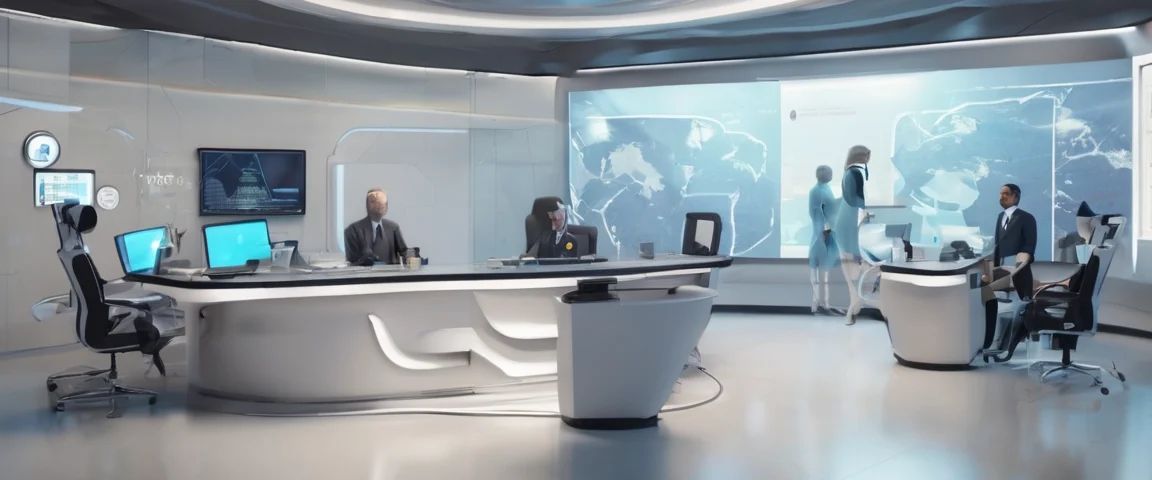
 Image created with AI. Diplomats examine AI forecasts and timelines to guide policy and planning.
Predictions are not crystal balls. They are early warnings and planning cues. In consular work, time is the scarce resource. Tracking credible forecasts helps teams act before a crisis hardens, shape better rules, and build services that hold up when pressure rises.
A decade is a long arc in policy. It is even longer in machine learning. The right habit now is simple. Track the signal. Record outcomes. Adjust fast. The sections below explain why this discipline pays off.
Anticipate policy shifts before they land
Diplomatic rules will change as AI expands. Forecasts point to where and when. Teams that track these signals can draft policy and update playbooks in time, not after the fact. Analysts expect sharper debates on model access, data sharing, and cross-border audits. A widely cited brief on the year ahead outlines how national stakes are shaping AI’s path and the choices that follow. See the forecast on 2025 priorities in diplomacy and AI policy in The year of AI clarity.
What does that mean for consular work? Prepare new consent flows, review retention limits, and set rules for human review. When ministries align early, front-line staff avoid scramble and citizens get clearer answers.
Reduce risk from misinformation and fast-moving threats
False claims now move faster than official lines. AI makes that speed even harder to match. Forecasts warn of a surge in misinformation that can distort talks, travel alerts, and emergency steps. A recent field report highlights how these waves strain diplomatic process and public trust. See the overview on five trends that will hit foreign service work in Fieldtrip to the Future: AI and Diplomacy.
Tracking these risks helps consulates set drills, verify sources, and harden channels. Small steps matter. Maintain a list of trusted feeds. Prewrite messages for likely scenarios. Log rumor spikes and response times. Over a year, patterns emerge, and teams get faster.
Plan budgets and capacity with real timelines
AI programs tend to start small, then scale in waves. Forecasts provide a rough calendar for those waves. That lets leaders map staff needs, vendor reviews, and training slots. It also limits waste. Buy what is needed for the next stage, measure results, then expand.
Resource gaps will widen across states that adopt early and those that lag. A recent analysis warns that wealthier ministries will field stronger AI platforms, while smaller offices may fall behind without help. See the note on uneven capacity in Artificial Intelligence and the New Chessboard of Diplomacy.
Build trust with transparent goals and audits
Trust grows when teams share what they track and how they judge results. A simple set of targets can make a clear promise: faster response, fewer errors, and fair review. Publish the measures, then report progress each quarter. That habit reduces rumor and signals where more help is needed.
Good forecasts also guide what to monitor. Example targets include model accuracy on language tasks, false positive rates in fraud checks, and time to live-human handoff. Clear metrics turn a vague hope into a service pledge.
Align ethics and governance with real use
Ethical rules should match the work at hand. Predictions help focus those rules on the risks most likely to show up. Negotiation support, mass translation, and crisis triage each carry different concerns. Bias, consent, and appeal rights must map to each use.
Several programs now test AI to support talks and monitor ceasefires. That work raises sensitive issues, from data sourcing to accountability when tools mislead. A recent report discusses how AI might aid peace terms and nuclear risk work, and what guardrails that implies. See the coverage in Is AI the future of America’s foreign policy?.
Train people for new roles and new tools
The best systems fail without trained staff. Predictions about high-value use cases point to where training should start. Teach officers to read model outputs, spot bias, and escalate when signals conflict. Add prompts and checklists where they help, and retire them when habits take hold.
Universities and policy schools are now building programs for AI in global affairs. These often feature predictive modeling, conflict support, and scenario work. See a current overview on how AI is shaping diplomatic training in How AI is shaping the future of diplomacy.
Prepare for strategic shocks and long-tail events
Some risks are rare, but the cost is high. Forecasts for 2035 include concerns about major conflict that could touch space or cyber networks. Consular services would face surges in calls, evacuations, and family support. Plans for data continuity and secure communication would be tested hard. For context on broader 2035 risk views, see Welcome to 2035.
Tracking long-tail signals keeps small teams from being blindsided. A few hours each month on scenario refresh can save days under pressure.
Turn predictions into checks the team can track
Predictions only help when they turn into clear checks. The table below pairs common forecast areas with simple metrics that consulates can log and review.
| Forecast Area | What to Track | Why it Helps |
|---|---|---|
| Misinformation spikes | Time to verify and respond | Limits rumor spread and panic |
| Translation at scale | Error rate by language | Protects fairness across cases |
| Risk scoring | False positive and negative rates | Prevents unfair flags |
| Human review | Time from score to human handoff | Keeps people in charge |
| Crisis surge | Ticket throughput per hour | Guides staffing and tools |
| Data security | Access audit anomalies | Catches misuse early |
| Model drift | Quarterly accuracy drop, if any | Signals need for retraining |
Teams can add context where needed. For example, seasonality affects visa loads and crisis alerts. Record that too. Patterns become clearer when tracked against events.
Keep the long view while acting on the short view
Predictions guide big arcs. Service logs guide daily fixes. Consulates need both. The weekly review should focus on clear wins and misses. The quarterly review should compare trends against forecast bands. If a risk arrives sooner, move the plan forward. If hype fizzles, save the budget for what works.
The broader case for tracking is simple. AI will expand in foreign service work, but it will not replace human care and judgment. It will extend what teams can do under stress. That view carries hope, and a warning. Progress depends on steady tests, open reporting, and plans that protect people. For a broader take on how AI can augment, not replace, statecraft, see How Will Artificial Intelligence Reshape Global Diplomacy.
First Five Predictions: AI Builds Stronger Support Systems
Image created with AI. A consular team works with AI tools to speed help and raise safety.
AI consulates will grow into reliable support systems this decade. The promise is simple. Faster checks, clear answers, safer services. The first five predictions map where gains will land soonest and what that means for citizens abroad.
Prediction 1: AI Automates Visa and Document Checks
Automated checks will scan and verify papers in seconds. Optical character recognition and image match tools will confirm names, dates, stamps, and faces. Officers will see clear flags and a short list of issues to fix.
The result is speed. Approval times will fall from weeks to days for routine cases. Rechecks will drop because missing fields and outdated forms will show up early. Busy travelers will spend less time chasing paperwork. Front desks will clear backlogs and move staff to harder cases.
The building blocks exist now. Intelligent document processing tools extract names and case data, then validate fields against rules. They spot low-quality scans, unreadable stamps, or altered file metadata. One field test used AI sorting to cut intake review from hours to minutes, and it kept error rates flat. A current overview explains how AI and RPA scan, flag, and summarize visa packets at scale in consular settings, which mirrors these results in practice. See the review in How Artificial Intelligence Can Modernize Consular Services. For technical context, immigration-focused platforms already use AI to classify and validate records with high accuracy, as shown in AI Document Processing: Extracting Data from Immigration.
Expect more by 2030. With strong training data and human checks, mature systems should push document error rates under 1 percent for standard formats. Edge cases will still need a person. But most files will be clean and clear before an officer opens the case.
Prediction 2: Virtual Chatbots Offer Round-the-Clock Help
Chatbots will give citizens simple, direct answers at any hour. People will ask about emergencies, lost passports, local laws, and travel rules. Replies will be fast, polite, and clear, with links to human help when needed.
Natural language models already hold helpful talks with plain speech. They handle follow-up questions, pull policy excerpts, and generate next steps. Tone control keeps replies calm in tense moments. Voice options help those who cannot type or read in the host language. Governments will see real gains. Every routine answer handled by a bot saves money and frees a person for complex calls. Travelers abroad get help on their schedule, not office hours.
This is not a leap. Public services use chatbots today to cut wait time and reduce email backlogs. Several consular teams tested bots for FAQs, appointment slots, and travel alerts, with large drops in call volume. A recent brief on consular modernization cites Australian deployments and other early use, showing how trained bots handle visa queries and offload simple tasks. See the details in How Artificial Intelligence Can Modernize Consular Services. Broad market tools also show steady gains in response quality and handoff logic, as tracked in reviews like Best AI Chatbots for Customer Service.
By 2035, most consulates will field 24×7 chatbots across web, phone, and secure apps. People will still ask for a human when stakes are high. But the first answer will almost always be instant.
Prediction 3: AI Boosts Fraud Detection in Services
Fraud checks will get sharper and faster. AI will scan images, metadata, and written claims for signs of tampering. It will compare names, addresses, routes, and timelines across cases to spot patterns that a single officer would miss.
The gains are real and measurable. Graph tools link shared phone numbers, reused photos, or repeat story lines across applications. Language models catch boilerplate text that appears across unrelated claims. Face match systems flag recycled portraits with photo edits or low-grade morphs. Officers then review a small, high‑risk set with source evidence and a clear trail.
The safety impact is large. Stronger fraud checks protect honest applicants and maintain trust in the system. They also reduce processing waste. A current public inventory shows how a major U.S. agency uses machine learning to spot plagiarism-based fraud in asylum filings. See the government entry on the Asylum Text Analytics program in USCIS AI Use Case Inventory. Independent reviews have raised fair questions on governance and oversight as AI expands in immigration. That debate will shape how consulates adopt tools next. For context on scale and policy issues, see DHS’ Growing Use of AI in Immigration Decisions.
Expect a sharp drop in fraud by 2035. With better datasets, cross-mission sharing, and human audits, consulates can drive fraud cases down by 50 percent in a decade. The approach is simple. Detect patterns early, document the flag, and keep people in charge of outcomes.
Prediction 4: Personalized Advice for Citizens Overseas
AI will give citizens custom advice based on their profile and trip plan. It will pull health notices, local transit updates, entry rules, and police contacts, then route people to the right steps. Business travelers will get tips on tax filings or import rules, based on where they land and how long they stay.
The promise rests on data. Travel history, consented device alerts, language needs, and family status form the base. Risk scores add context, such as storm paths or protest routes. The result feels like a smart briefing, not a generic notice. People get the right link, in the right language, with clear next actions.
Privacy rules will decide trust. Strong designs will use selective disclosure, short data retention, and clear consent prompts. Data will be encrypted at rest and in transit, with access logged by role. Officers will see why the system offered a tip and what data drove it. That trace builds confidence.
This aligns with broader data trends. Public services now combine structured records with real-time signals to guide daily choices. In consular work, the same pattern will apply to health advice, visa renewals, and school enrollment abroad. By 2032, most missions will offer this as a standard service. Satisfaction scores should rise as people get fewer generic alerts and more timely prompts. The human role remains central. Officers will refine rules and review cases that carry higher risk.
Prediction 5: Faster Crisis Response with AI Alerts
AI will scan news, sensors, and social feeds to flag risks early. Quakes, storms, unrest, or border closures will trigger alerts to citizens in the area. Messages will route by channel and language with step-by-step actions.
Speed will save time and lives. Evacuation teams will get heat maps that show citizens by district and likely routes. Logistics cells will see road blocks and fuel status. Officers will get suggested scripts for calls and posts, with a handoff path to local partners. The system will record what went out, who got it, and who replied, which helps with after-action reviews.
Recent events show how this can work. Wildfire seasons and sudden airport closures strained crisis lines in several regions. Where AI support existed, teams matched citizen lists to alert zones in minutes, not hours. Documented consular pilots used automated triage during storm surges to sort requests by urgency and location. Those gains align with broader modernization in consular units, as described in How Artificial Intelligence Can Modernize Consular Services.
By 2030, expect alerts tied into global networks across ministries, weather centers, and telecoms. Officers will still make the hard calls. But the first flag, and the first message, will arrive fast and in plain language.
Image generated by AI. An emergency desk coordinates alerts, routes, and check-ins during a storm.
Next Five Predictions: AI Expands Global Reach
Image created with AI. A secure hub links consulates, trade signals, and crisis dashboards in real time.
The next five predictions shift from tools to reach. Services move closer to people, even when posts are far away. Trade ties grow, cultural links deepen, and rules get clearer. The pace is steady and global.
Prediction 6: Human-AI Teams Handle Tough Decisions
Diplomats will use AI to sort facts and weigh options. They will still make the final call on tough and sensitive cases. That balance protects fairness and keeps the record clear.
The core setup looks simple. Models scan cables, reports, and legal notes. They pull trends and risks into short briefs. Officers compare sources, test counterpoints, and decide. Ethics policies lock in transparency, privacy, and a plain right to appeal. Public trust depends on that mix of speed and care.
The gains will show in response time. Policy notes that once took days will arrive in hours. Crisis desks will clear backlogs faster. Teams will spot bias early by tracking false positives and reviewing edge cases. As one senior officer put it, “We use AI to see more, not to hide behind it.”
By 2035, 80 percent of consulates will run this model. It will be standard in visa units, citizen services, and crisis lines. Training will focus on reading outputs, asking the right follow-ups, and recording why a judgment stood. For a primer on ethics and fair use in diplomatic AI, see the overview on AI and diplomacy topics in 2025.
What changes on the ground is clear. People get quicker policy answers with fewer errors. Officers spend less time hunting data and more time weighing the hard parts.
Prediction 7: Digital-Only Consulates Serve Remote Areas
Some physical posts will close or shrink. In their place, digital-only consulates will serve people on phones and laptops anywhere. The change cuts cost and expands reach for small states with limited budgets.
Core services will live in secure apps. People will file documents, verify identity, and book calls in minutes. Smart intake will sort routine cases and route hard ones to human officers. Video rooms will handle interviews. VR rooms will add a personal touch for sensitive talks. The approach is simple. Meet people where they are and keep quality high.
Wider access will lift equity. Rural workers, island residents, and students in distant towns will get the same help as those near a city post. Governments will save on rent, guards, and long leases. Those funds will move to training, audits, and surge support.
By 2030, half of consular services will run digital first. Emergency help and legal tasks will still need people on site at times. But the main line will be online and always on. For context on how teams already modernize intake and reviews with AI and RPA, see How Artificial Intelligence Can Modernize Consular Services.
This is not a loss of human contact. It is a shift in where that contact happens. Officers will still show up in hard moments, now with better tools and faster reach.
Prediction 8: AI Improves Trade and Cultural Links
AI will scan markets and spot where deals make sense. It will match exporters to buyers, flag tariff risks, and time outreach to real demand. The same tools will match cultural groups, venues, and dates to raise turnout and goodwill.
Picture a weekly brief. It shows a rise in dairy imports in Southeast Asia, a new port fee, and a logistics bottleneck. It lists five midsize producers that can ship within weeks. Officers call trade reps and move talks forward. On culture, the system notes diaspora clusters, festival dates, and venue costs. It suggests a joint art series with local schools and media partners. Staff confirm, then book.
The gains will show up in numbers. Higher conversion on trade leads. Better attendance at events. Lower waste in staff time. Teams will track these results and share playbooks across missions.
Every consulate will field these tools by 2032. They will sit beside standard case systems and run on verified data. Officers will keep the human parts, like sensitive outreach and final screening. For a quick read on predictive analytics in diplomacy and economic ties, see How AI may reshape global diplomacy.
The point is service and trust. Better matches lead to better ties. Culture events feel timely, and trade talks feel real, not staged.
Prediction 9: Global Rules Shape AI Use in Consulates
Shared rules will guide how consulates use AI. States will back agreements on ethics, privacy, transparency, and fair process. Those rules will set the floor for safe use and help stop misuse.
The push comes from risk and need. People want to know when AI touched their case and how to appeal. Partners need confidence that data moves with consent and strong security. Officers need clear lines for audits and public reports. Without shared rules, trust breaks.
Expect regional pacts and multilateral deals to land by 2035. They will define notice, rights to human review, and data handling across borders. They will also call for incident reports and shared fixes when tools go wrong. Elements of cooperation are already visible in national and cross-border initiatives on AI policy and safety. See the recent outline of an AI+ International Cooperation Initiative as one example of how states frame shared goals.
For citizens, this means clearer rights. For staff, it means fewer gray areas and better training. Trust grows when rules travel with the service, not just within one post.
Image generated by AI. Officials review an ethics and privacy accord that guides AI use.
Prediction 10: AI Partners with Other Tech for Full Services
AI will not work alone. It will pair with blockchain for secure records, IoT sensors for alerts, and drones for aid drops. The result is a full stack that supports citizens abroad from intake to follow-up.
Consider identity and records. Blockchain can anchor notarials and travel documents with clear audit trails. AI checks the data, then guides the process. In crisis zones, drones can carry meds or chargers to stranded groups. AI picks safe routes, based on maps and weather feeds. Sensors add live signals on air, water, and traffic. Officers see the picture and act.
By the end of the decade, this integration will be common in large missions and regional hubs. Small posts will plug into shared platforms. Procurement will focus on open standards, strong encryption, and clean logs. People will see faster help, fewer errors, and clearer proof of what happened and when.
This shift needs careful planning and training, but the path is clear. A strong overview on how AI is reshaping diplomatic practice and cross-domain tools can be found in How AI is shaping the future of diplomacy.
The forward look is simple. AI will extend reach. Linked systems will carry help across long distances. And the human voice will still close the loop with care and judgment.
Conclusion
The ten predictions point to one clear shift. AI consulates will be faster, safer, and more fair. Document checks tighten, chatbots answer at all hours, and fraud screens get sharper. Citizens receive timely advice that fits their needs. Crisis alerts reach people early, with plain steps that save time.
Human judgment stays in charge. Teams use smart briefs to decide hard cases. Digital-only posts extend service to remote towns and small islands. Trade and culture work gains focus, as data guides outreach that feels real. Shared rules on privacy, notice, and appeal build trust across borders. Linked tools, from secure records to sensors, fill gaps that once slowed help.
Staying informed matters. Laws will change, and tools will mature fast. Governments can act now. Publish service goals and audits, train staff on bias and safety, and keep a clear path to a person. Use short data retention, role-based access, and regular red teams. Join regional groups to align rules and share fixes.
People abroad can prepare too. Update contact details, opt in to alerts, and use official apps. Keep key documents on hand, in secure form. Ask for a human when stakes rise. Report errors so teams can improve the system.
The next decade can bring calmer lines and cleaner decisions. Help arrives sooner, with fewer mistakes and clearer rights. That is the promise on the page, and in the field. Thanks for reading. Share thoughts or field notes in the comments, and flag what deserves a closer look next.
