
AI Consulates in Action: What You’ll Notice When You Need Help Abroad
December 27, 2025
AI Consulting in 2026: How to Choose the Right Partner for Your Business
January 2, 2026
Conflict resolution is the act of getting from friction to a workable peace, whether that’s two siblings fighting over a shared car, a team split by a messy deadline, or states locked in tense international relations. It’s not always a hug and a handshake. Sometimes it’s a clear boundary, a fair deal, or a safe exit.
In 2026, technological advancements position artificial intelligence like a bright flashlight in a dark hallway. It can spot tension early, sort the messy facts, and suggest calmer words to enhance decision-making when yours are on fire. That sounds great, until you remember the hallway has mirrors. AI can reflect bias, spread private details, or get tricked by fake “proof”.
You’ve seen the small version of this already. A work chat spirals, sarcasm lands wrong, two people pile on, and now you’re reading messages with your jaw tight. AI can help you slow that train. But it works best with a human in charge, because trust, harm, and accountability don’t run on autopilot.
You’re about to learn what AI can do, where it fails, and how to use it without making things worse.
What AI can do for conflict resolution in 2026 (and what it cannot)

In 2026, the best use of artificial intelligence in conflict resolution through human-machine collaboration looks less like a robot judge and more like a calm assistant sitting beside you with a clipboard. It watches patterns, holds context, and keeps the process tidy when emotions try to flip the table.
Here’s what it can help you do well:
Spot tension early. AI can scan text, audio transcripts, or feedback forms for rising anger, fear, or blame through data analysis. In a workplace, it can catch the shift from “Can you fix this?” to “You never fix this.” In a community group, it can flag when posts move from debate to pile-on behavior.
Help people communicate better. AI can rewrite drafts into neutral language, point out loaded phrases, and suggest questions that invite facts instead of attacks. You still choose your voice, but you get a safer first draft when you’re upset.
Offer options in a negotiation. Some tools can suggest settlement ranges, highlight trade-offs, or surface “packages” that meet both sides’ needs to support decision-making. This is useful in routine disputes, where the main problem is time and fatigue.
Speed up routine disputes. AI can take notes, sort evidence, generate agendas, and track action items. That matters because many conflicts don’t stay small. They rot. They spread. They turn into resignations, lawsuits, or long-term silence.
But AI has hard limits, and pretending otherwise is how you turn a tool into a weapon.
AI can’t feel trust. It can mirror polite words, but it can’t carry the human weight of “I’m safe with you.” AI can’t repair harm on its own. It can suggest an apology, but it can’t mean it. AI can’t replace accountability. If a manager abused power, no summary report fixes that. If a family member crossed a line, the line still matters.
If you want a clear view of how artificial intelligence is being used to anticipate conflict at larger scales, you can look at work on predictive warning and crisis risk, like PRIO coverage on predicted hotspots (ReliefWeb report on 2026 conflict risk) and discussions on AI-driven warning systems (Applying AI to Strategic Warning).
Early warning systems that spot conflict before it blows up

Early warning tools often rely on sentiment checks and pattern checks powered by machine learning. Think of them as smoke alarms. They don’t stop the fire, but they can wake you up.
In late 2025 research and pilots, some systems reported high detection performance in narrow tasks, including setups reporting up to 93% accuracy for spotting emotional manipulation patterns like gaslighting through predictive modeling. That number sounds comforting, but it depends on the setting, the language, and the data used. Sarcasm, slang, and second-language English can confuse models fast.
When you get a warning, treat it like a weather alert, not a guilty verdict:
- Pause before you reply, even for 10 minutes.
- Check facts, don’t trust the “tone score” alone.
- Ask a human to review context, like HR, a manager, or a trained mediator.
- Invite a reset message, like “Let’s move this to a call with ground rules.”
If you want a wider view of early warning work, the ITU’s AI for Good program often tracks how artificial intelligence supports warning and risk sensing (AI in early warning systems).
AI-assisted mediation that makes talks faster and more organized
Mediation fails for boring reasons as often as painful ones. People forget what was agreed. They talk in circles. They argue about what was said two meetings ago. Artificial intelligence helps with that unglamorous part.
In hybrid mediation, a human mediator leads, and AI supports. Studies and field reports have found hybrid approaches can raise outcomes and reduce time, with reported improvements ranging from 23% to 67% compared to solo approaches in some settings, plus shorter sessions reported around 30% to 40% in some cases. You also see time savings from automation, like scheduling and draft agreements, with some workplace pilots reporting up to 40% faster resolution cycles.
In day-to-day use, AI can:
Build an agenda from messy input. You drop in emails or chat logs, and it proposes the topics that keep repeating.
Create neutral summaries. It turns “You sabotaged me” into “There’s a concern about missed handoffs and impact on deadlines.”
Track action items. It logs who does what by when, so you don’t end every meeting with “So, we’ll see.”
Keep a clean record. That helps trust, because people feel the process is fair when agreements are written down.
If you want to see how researchers test AI as a mediator and where it struggles, the AAAI work on AI-mediated dispute resolution is a useful reference point (AI-Mediated Dispute Resolution).
Where AI shows up today: workplace disputes, courts, and peace talks
AI conflict tools already live inside systems you use without thinking about it. They’re in complaint forms, customer support flows, moderation queues, and HR platforms. The feel is quiet, like automatic doors. You don’t notice them until they stick.
In the workplace, artificial intelligence is often used for triage. It sorts complaints by topic, urgency, and risk. It can also suggest “next best steps”, like coaching, mediation, or a formal review. For you, the impact is simple: you may get a faster response, but you also may get a response shaped by a model’s guess about your intent.
In courts and court-adjacent settings, artificial intelligence is often used for speed and volume. It can help with document review, form checks, and settlement prep. It’s not magic. It’s paperwork with better legs.
At the global scale, AI supports peacebuilding by listening at scale, clustering public input, and mapping areas of agreement in international relations. That doesn’t replace diplomats in the practice of diplomacy. It gives them a clearer map when navigating the chaotic geopolitical environment.
Online dispute resolution and court-adjacent tools you might already use
Online dispute resolution (ODR) is the “submit your case online” approach. You file a complaint, the other side responds, and the system guides you toward an agreement. For low-complexity disputes, it can be a relief. You don’t take time off work. You don’t sit in a hallway waiting for a name to be called.
Some ODR systems process millions of cases per year across large platforms and public-facing programs. At that scale, even small time savings matter. Artificial intelligence helps by:
- Suggesting fair ranges based on past outcomes
- Flagging missing info, like dates, receipts, or key terms
- Nudging both sides to respond, so the case doesn’t stall
The caution is plain: read the terms. Know what data you’re giving up. And watch for the moment when a “fast” process becomes unfair because your case isn’t routine.
If you want a grounded overview of how AI fits into ODR and where users can get hurt, this legal analysis is worth your time (The role of Artificial Intelligence in Online Dispute Resolution). For a broader technical review of intelligent dispute support tools, this open-access paper is also helpful (Using Artificial Intelligence to provide Intelligent Dispute Resolution Support).
Diplomacy and peacebuilding: using AI to listen at scale and map points of agreement
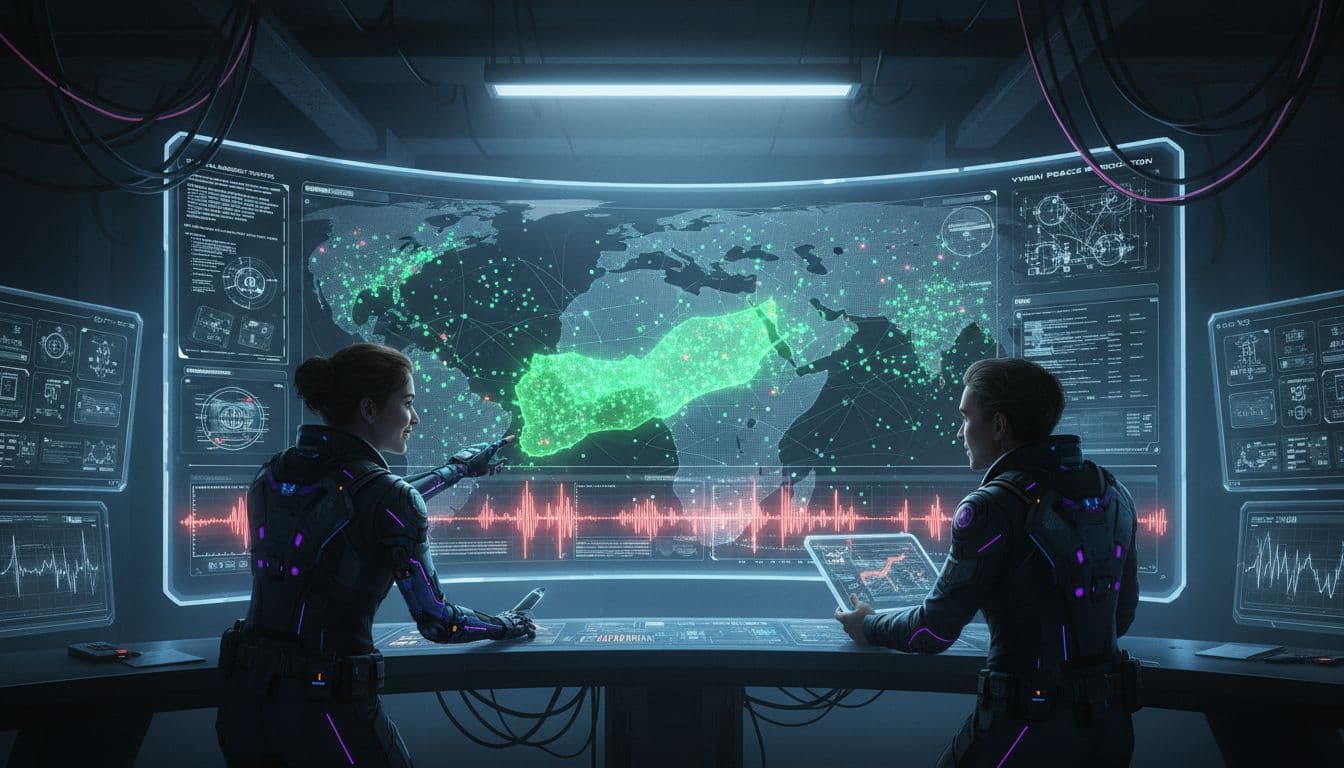
Peace talks often fail because the room is too small. Not enough voices fit inside it, so deals feel fake on arrival.
AI helps widen the room, exerting soft power by listening at scale to support influence in conflict zones. A well-known example is Yemen-focused work where participants, including youth, shared input through channels like WhatsApp, with voice-to-text pipelines and dashboards used to organize themes. This digital public diplomacy can cluster messages into shared needs, spot points of agreement like potential ceasefire compliance, and highlight what the loudest voices missed.
You still need humans for the parts that can’t be computed, underscoring hybrid diplomacy as the combination of digital tools and face-to-face mediation:
- Building trust with groups who fear retaliation
- Protecting safety and identity
- Choosing what to share, and what to keep private
- Making the final deal, then living with the peace agreements
Recent milestones like AI Diplomacy 2025 pave the way for advancements leading into 2026. For a research look at how machine learning supported mediation work tied to Yemen, Cambridge’s Data & Policy article is a strong anchor (Supporting peace negotiations in the Yemen war through machine learning). For wider peacebuilding context, the UN DPPA project summary gives a useful overview (AI for Peacebuilding). And if you want a grounded view of tech and peace work in Sri Lanka, this report maps both promise and problems (Exploring the PeaceTech in Sri Lanka).
The hard problems: bias, privacy, deepfakes, and who gets to control the tools

Artificial intelligence can calm a conflict, or it can pour fuel with a straight face. The danger is that it often looks neutral while doing harm.
The core risks of artificial intelligence come in four buckets: bias, privacy loss, fake media, and control. These raise key AI ethics concerns. Control matters because the group that owns the tool can shape the “rules” without saying so through governance of AI, influenced by national AI strategies, like moving the goalposts amid strategic competition while the game is on. This affects the global balance of power between groups.
Bias and unequal outcomes: how “neutral” AI can still pick a side
Bias can enter through training data, language gaps, and culture gaps. The same phrase can mean different things across groups, and AI may score one group as “aggressive” more often, even when the intent is normal.
A simple example: sarcasm. “Sure, great plan” can be a joke, a jab, or a surrender. If you write in second-language English, your tone may sound blunt when you’re trying to be clear. AI can misread both.
Guardrails you can apply now, guided by ethical considerations and AI ethics:
Test on varied cases. Run examples from different teams, age groups, and language styles before trusting the tool.
Track outcomes. Don’t just ask “Did we settle?” Ask “Did one group keep losing?”
Give an appeal path. If AI suggests a step, people need a way to ask for human review without punishment.
Privacy and manipulation risks: sensitive data leaks and deepfake “evidence”
Conflict tools can touch your most sensitive data: messages, audio, meeting notes, transcripts, and even private feedback about fear, stress, or harassment. If that leaks, it undermines digital sovereignty, and the conflict grows teeth.
Basic protections help more than people think:
- Collect only what you need.
- Get clear consent, in plain words.
- Set a retention limit, then delete on schedule.
- Use secure storage and strict access controls.
Then there’s deepfake risk. A fake voice note, a clipped video, or a “transcript” that never happened can poison a negotiation fast with disinformation, because people react to shock before they check truth. Disinformation like this spreads quickly in high-stakes settings.
When stakes are high, slow down and verify:
Verify sources. Ask where the file came from and who first shared it.
Keep originals. Don’t accept re-uploaded clips as your only copy.
Use trusted channels. Share evidence through known, secure paths.
Pause before action. If it triggers panic, that’s your cue to check twice.
For a peace and conflict-focused look at synthetic media threats and real mitigation steps, WITNESS has a strong report (Audiovisual Generative AI and Conflict Resolution). For broader risk framing in plain language, IBM’s overview is a practical starting point (10 AI dangers and risks and how to manage them).
How to use AI in conflict resolution without losing the human part
You don’t need a lab or a big budget to use artificial intelligence well. You need rules, consent, and the courage to keep humans responsible for human choices. This digital transformation lets teams harness these tools effectively in everyday disputes.
Treat AI like a flashlight, not a judge. It helps you see. It doesn’t decide what’s right.
A simple 6-step workflow for AI-assisted conflict resolution
- Define the problem in one sentence. “We’re missing deadlines because handoffs fail.” Keep it tight.
- Get consent from both sides. Say what tool you’ll use and what it will do.
- Collect only what’s needed. Pull the messages tied to the issue, not months of personal chat.
- Run AI to summarize and list negotiation strategies. Ask for neutral summaries, shared interests, and possible next steps.
- Do a human tone and bias check for diplomatic communication. Read it aloud. Look for loaded language. Fix it.
- Agree on next actions and a follow-up date. Write it down, confirm it, revisit it.
A small extra step that pays off: document why you chose a path. Even in small-scale disputes, diplomatic practice standards apply. When people can see the “why,” fairness feels real, as explored by the CSIS Futures Lab.
When you should not use AI (or should pause and bring in a pro)
AI is the wrong tool when the conflict is tied to safety, coercion, or power you can’t balance.
Pause and bring in trained help when you’re dealing with:
- Abuse, stalking, or threats
- Major power gaps, like boss vs employee in a retaliation risk
- Minors
- High legal risk or safety risk
- A party who can’t opt out, or can’t understand the process
In these cases, use a trained mediator, legal counsel, or local support services. Speed is not the goal. Safety is.
Conclusion
In 2026, AI in conflict resolution can help you catch tension early, run cleaner talks, and settle routine disputes faster. It can also tilt outcomes through bias, expose private data, and spread deepfake “evidence” that blows up trust.
Your next step is simple and real. Pick one place where you engage in the practice of diplomacy, maybe a team chat, a family group thread, or a community board. Set ground rules, get consent, and use AI only as a support tool, with human review and a clear opt-out.
If you can keep the human parts human through diplomatic practice, artificial intelligence becomes a quiet ally, not the loudest voice in the room.
